Welcome to the World, Campo de Calatrava DO!

Photo via: www.vinocampodecalatrava.com

Photo via: www.vinocampodecalatrava.com

The EU has spoken, and—as of February 2024—it has granted its approval for a new appellation for Spanish wine: the Campo de Calatrava DO (Denominación de Origen).

Wine has been produced in the Campo de Calatrava area—located in the Ciudad Real province within the autonomía of the Castilla-La Mancha—since the Bronze Age. In modern times, the wines of the area have been bottled under the classification Vino de la Tierra-La Mancha (which covers the entire autonomía). At last count, there are eight commercial wineries in the region.

The Campo de Calatrava DO is located atop a unique geological feature known as the Campo de Calatrava Volcanic Field (La Región Volcánica del Campo de Calatrava). The region contains over 300 individual volcanic landforms, including lava domes, pyroclastic cones, and low-relief volcanic craters known as maars. While the area is believed to be dormant—the last known volcanic eruption dates to 3.600 BCE—the area contains the most significantly volcanic soils in the Iberian Peninsula. Topsoil is dark and stony, aiding in heat retention and drainage.

The Campo de Calatrava DO allows for a long list of wines styles to be produced. These include dry white, red, and rosé wines, quality sparkling wine, and sweet (late harvest) wines.

The list of allowed grape varieties is long and varied—and quite similar to those found in the nearby DOs of La Mancha and Valdepeñas.

  • Approved red grapes include Bobal, Cabernet Franc, Cabernet Sauvignon, Garnacha (Tinto), Graciano, Malbec, Merlot, Petit Verdot, Syrah, and Tempranillo.
  • Approved white grapes include Airén, Albariño, Chardonnay, Gewürztraminer, Macabeo (Viura), Moscatel de Alejandría, Moscatel de Grano Menudo, Riesling, Sauvignon Blanc, Verdejo, and Viognier,

We will post a map as soon as the newly crafted DO creates one.

Welcome to the world, Campo de Calatrava DO!

References/for more information:

Post authored by Jane A. Nickles…your blog administrator: jnickles@societyofwineeducators.org

Dispatch from the Léon DO

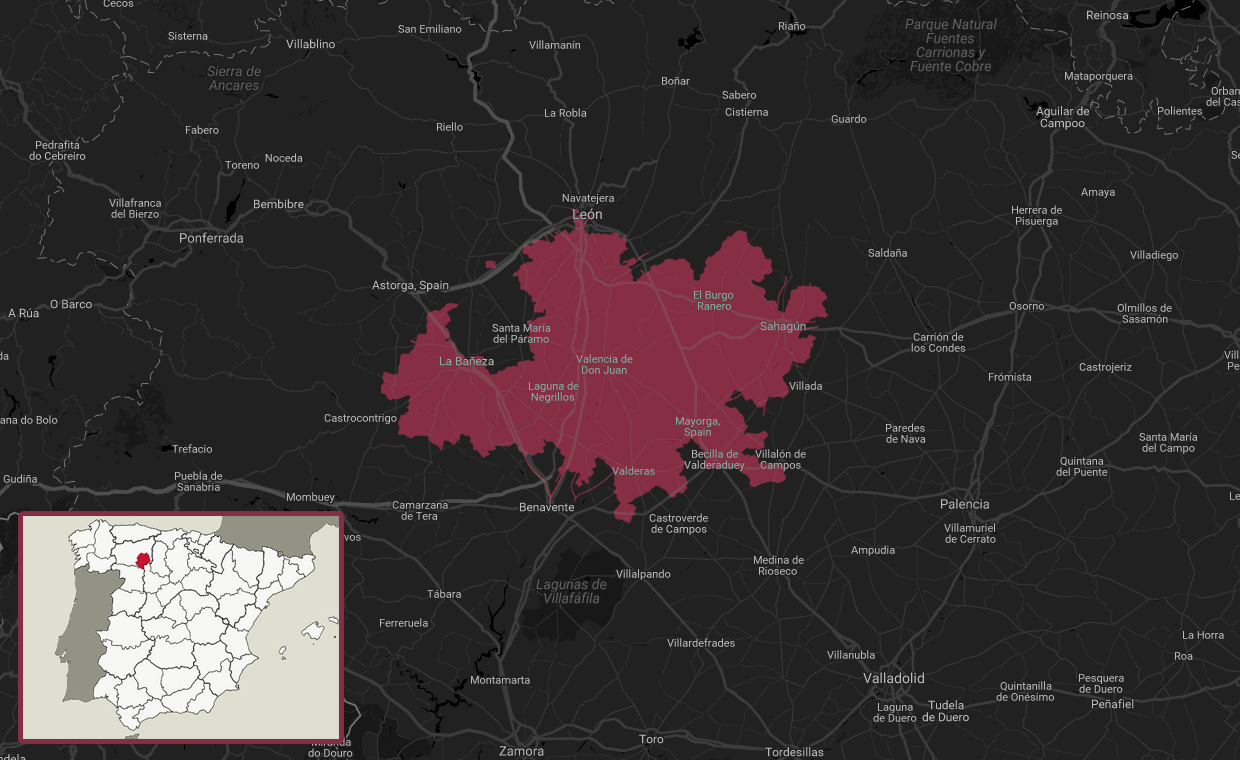
Leon DO graphicSpain’s Tierra de Léon DO (Denominación de Origen) made some news back in 2019 when it officially changed its name to Léon DO. Since then, it has continued to make news by competing in—and winning—major wine competitions and by attracting the largest crowd ever (over 25,000) to attend the annual DO León Wine Fair.

These days (February 2024) the DO is again making news by gaining approval from the EU for a range of updates and revisions to its wine rules and regulations. In short, the appellation has approved a new grape variety for use in its red wines and has added an additional wine type—sweet wines—to its roster.

The latest red grape of the Léon DO: The Negro Saurí grape variety (also known as Merenzao) has been added to the list of grape varieties authorized for use in the red and rosé (rosado) wines of the Léon DO. This grape is added to the list of previously approved grape varieties, including Prieto Picudo and Mencía (as recommended varieties) and Garnacha and Tempranillo (as authorized varieties).

Map of the DO Leon via www.doleon.es

Map of the DO Leon via www.doleon.es

Negro Saurí is an obscure local variety grown mainly in Léon. It requires a good deal of sunshine to thrive, is relatively thin-skinned, and light in color. The grape has been added to the roster in the hopes of preserving the heritage of the region’s indigenous vineyards, to increase the area’s biodiversity, and due to the spicy, complex character it brings to the wines.

The sweet wines of the Léon DO: With these recent changes, the Léon DO is approved to produce off dry (semidulce) and sweet (dulce) wines in red (tinto), white (blanco), and rosé (rosado) styles. Wines labeled as semidulce will contain between 1.8% and 4.5% residual sugar (RS); those labeled as dulce will contain at least 4.5% RS.

The newly approved sweet wines of the Léon DO will be based on the same grape varieties used in the dry wines of the region. In addition to the approved red varieties (discussed above), the white grapes of the DO include Verdejo, Albarín Blanco, and Godello (as recommended  varieties) and Malvasía and Palomino (as authorized varieties; Palomino is not approved for new plantings).

Note: as with all such updates, it may take a while for these updates to work their way through the various governing bodies (and even longer for the final documentation to become available for public perusal). However, the EU is spoken, so it seems these changes will soon become apparent in the marketplace.

References/for more information:

Post authored by Jane A. Nickles…your blog administrator: jnickles@societyofwineeducators.org