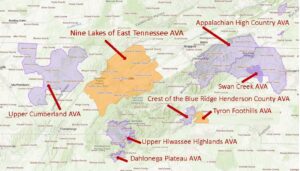
Base Map via the TTB AVA Explorer
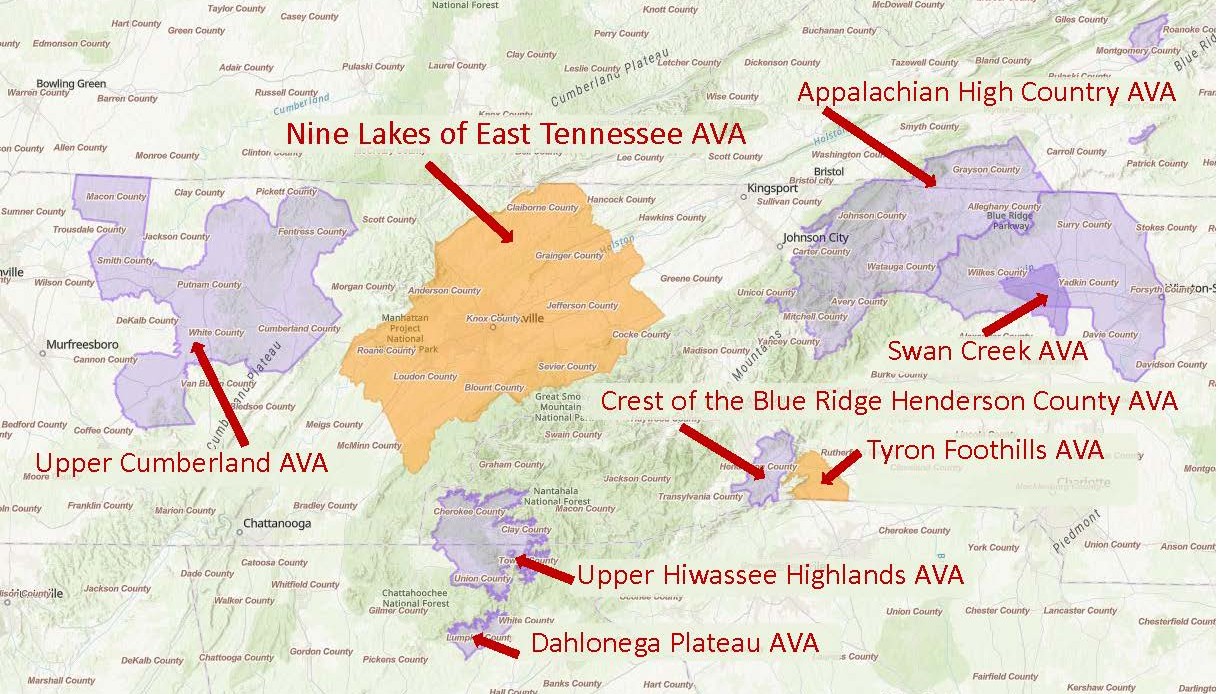
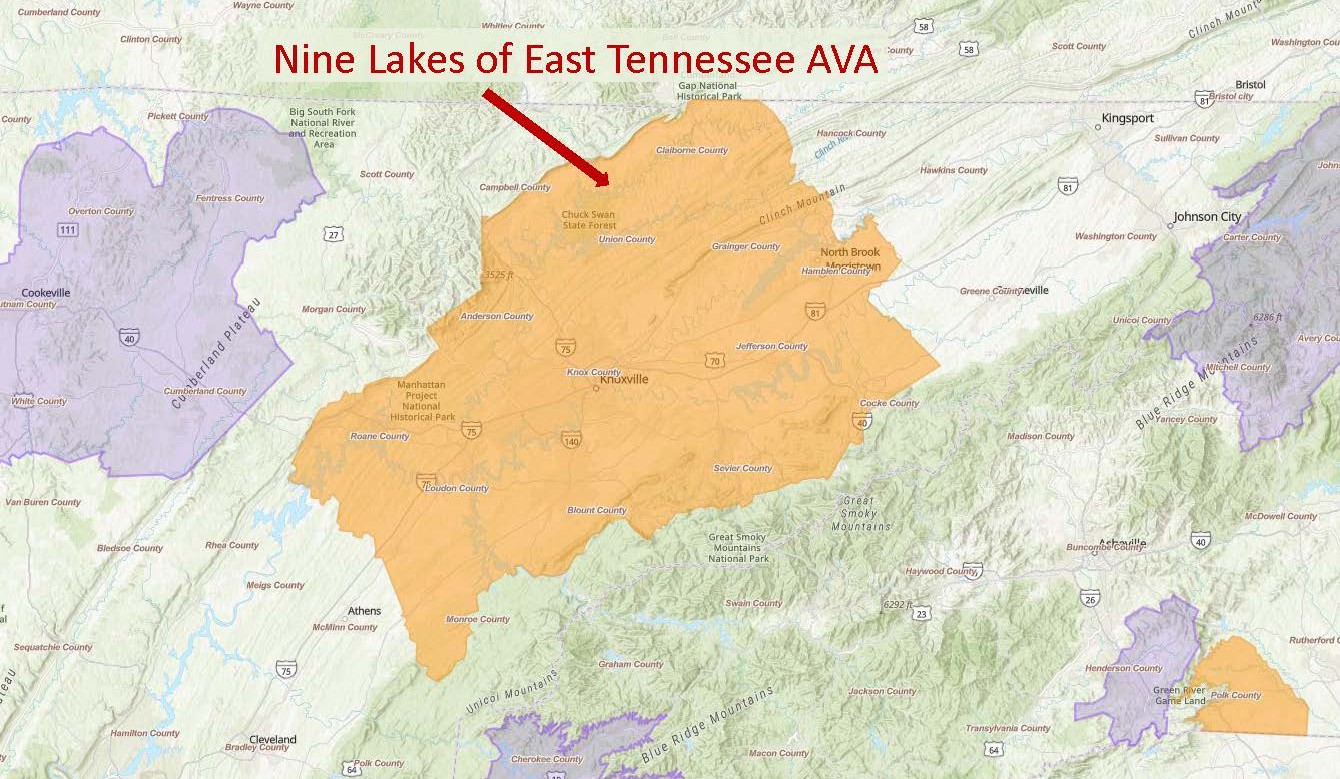
On March 24, 2026, the TTB (Alcohol and Tobacco Tax and Trade Bureau) of the United States approved the Nine Lakes of East Tennessee American Viticultural Area (AVA). The new AVA is located in northeastern Tennessee, covering (portions of, in some cases) Anderson, Blount, Campbell, Claiborne, Cocke, Grainger, Hamblen, Jefferson, Knox, Loudon, Monroe, Roane, Sevier, and Union Counties. These counties—centered around the city of Knoxville—surround the nine lakes formed by the Tennessee Valley Authority dams along the Tennessee River.
With the approval of this new appellation, Tennessee is now home to three AVAs (including the Upper Cumberland AVA and a portion of the Appalachian High Country AVA, both previously established). The Nine Lakes of East Tennessee AVA is not, however, located within nor does it contain any other established viticultural area
According to the original petition—submitted on behalf of the Appalachian Region Wine Producers Association and first published by the TTB in September of 2023—the distinguishing features of the Nine Lakes of East Tennessee AVA are primarily its topography, elevation, soils, and climate. These features are discussed below.
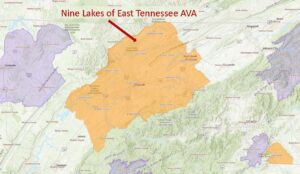
Base Map via the TTB AVA Explorer
Topography and elevation: In terms of geology, the eastern portion state of Tennessee can be roughly divided into three regions (from west to east): the Blue Ridge Mountains, the Valley and Ridge Province, and the Cumberland Plateau. The Nine Lakes of Eastern Tennessee AVA is located entirely within the middle of these three sections, the Valley and Ridge Province. This area is characterized by long, linear valleys tucked alongside the ridges of the Appalachian Highlands at elevations between 700 feet and 1,200 feet above sea level (significantly lower than the areas to its east and west).
Also significant, the Nine Lakes of Eastern Tennessee AVA sits entirely within the watershed of the Tennessee River and its tributaries. The Tennessee River flows southwesterly for 652 miles from the city of Knoxville to its confluence with the Ohio River near Paducah, Kentucky. Beginning in the 1930s, the Tennessee Valley Authority built 32 dams along the Tennessee River system to generate hydroelectric power, control flooding, and provide a navigable waterway between Knoxville and the Ohio River. Along the way, the namesake nine lakes of the region were created.
Soils: Limestone is the predominant bedrock in the area along with dolomite, shale, and sandstone. Topsoil consists mainly of silt, sand, and gravel atop clay. There are up to 18 different soil types found in the region; these vary due to elevation, aspect, slope, and depth.
Climate: Mainly due to its lower elevation, the Nine Lakes of East Tennessee AVA has slightly warmer overall temperatures than the areas to the east and west. The area also enjoys a longer frost-free growing season—averaging 213 days—than the surrounding areas (save for those to the immediate south). According to the Winkler Heat Summation Index, the new AVA falls between levels III (moderate) and V (warm). The new AVA is somewhat drier than the surrounding areas and receives between 40 inches and 45 inches of rain in a typical year.
When the Nine Lakes of East Tennessee is brought into force—on April 23, 2026, the same date as the (also) newly-approved Nashoba Valley AVA—the total number of AVAs in the United States will be 279.
The Nine Lakes of East Tennessee AVA is spread across 4,064 miles. The area has 232 acres planted to vines as well as 32 commercial vineyards and 30 wineries (numbers are approximate). A great diversity of grapes—including vinifera, labrusca, and hybrid varieties—are planted in the region. At this time, the leading varieties include Chardonnay, Norton, Catawba, Riesling, Niagara, Cabernet Franc, Vidal, and Chambourcin.
Welcome to the world, Nine Lakes of East Tennessee AVA!
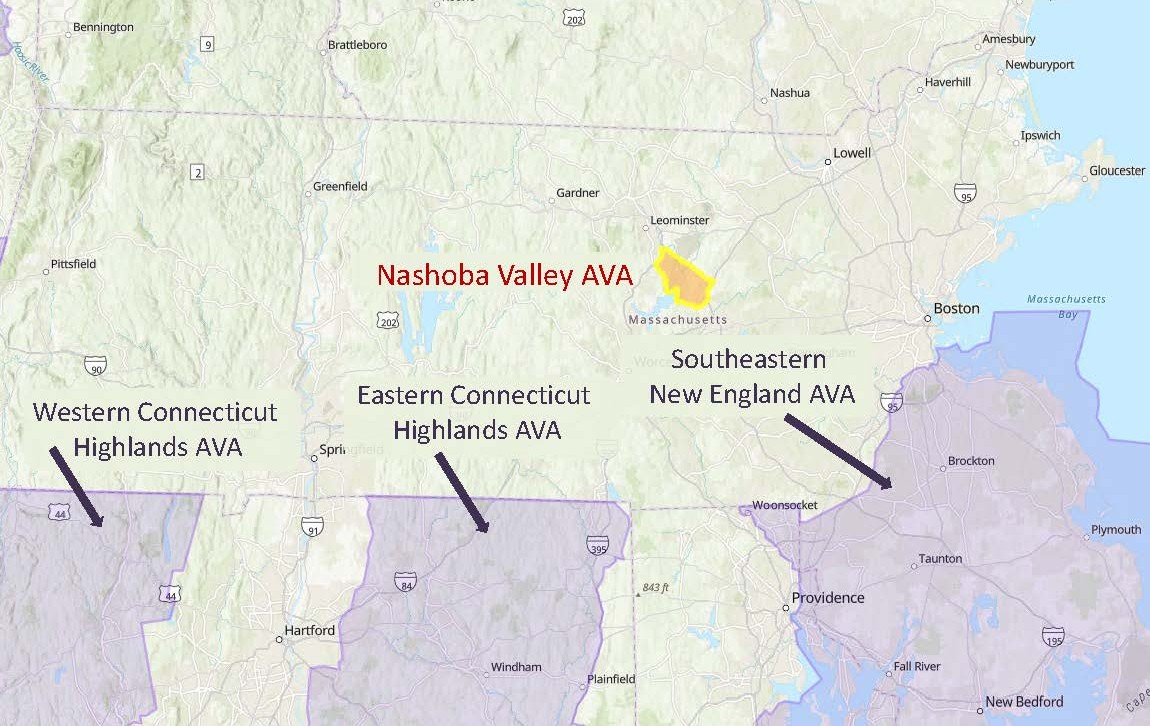
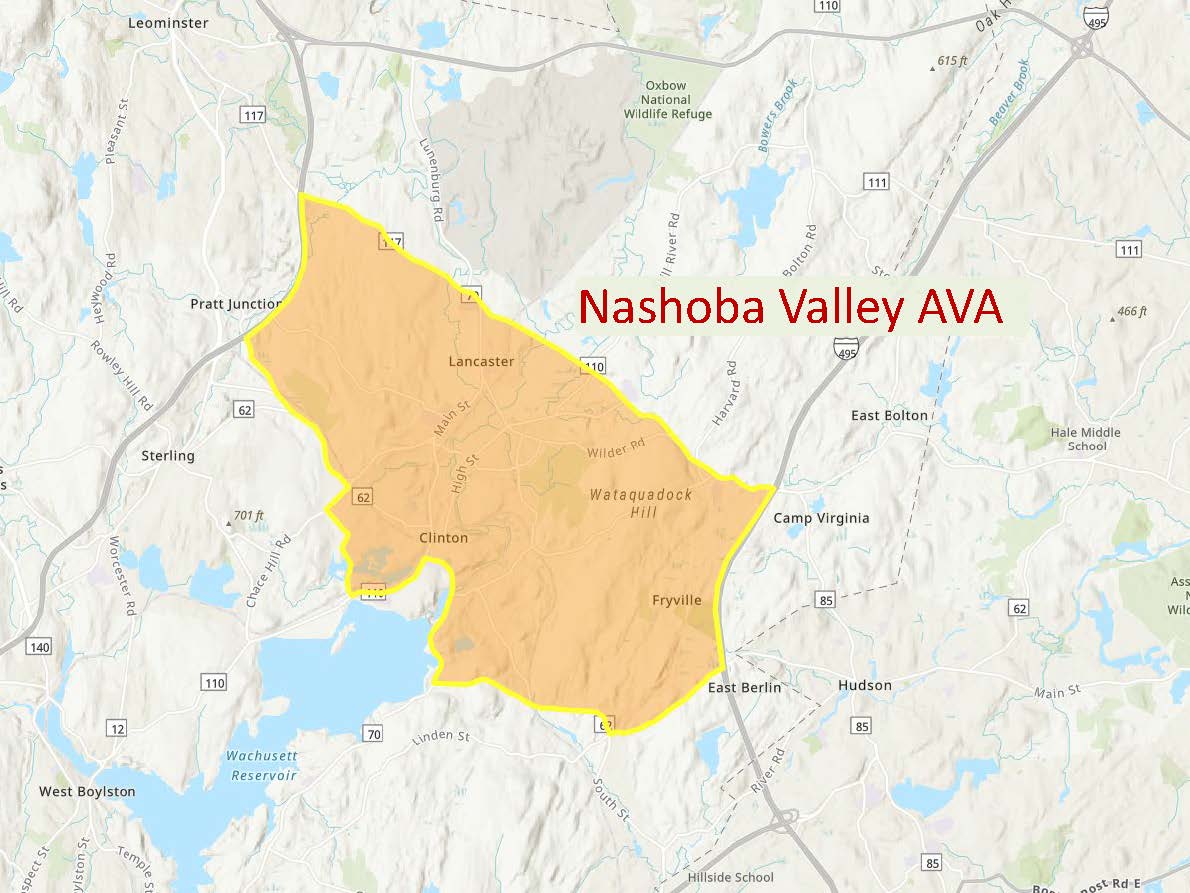
Note: The Nashoba Valley AVA (located in Massachusetts) was also approved on March 24, 2026. Click here for more information on the Nashoba Valley AVA.
References/for more information:
Post authored by Jane A. Nickles…your blog administrator: jnickles@societyofwineeducators.org
 On Saturday, October 10—at 10:00 am central time—we are pleased to offer one of our most popular webinars: A Spirited Discussion: The Insider’s Guide to the CSS Exam. This is one for the spirits crowd!! If you are interested in pursuing the Certified Specialist of Spirits (CSS) Certification—or just a spirits lover-bartender-mixologist-beverage aficionado interested in learning more about spirits and the CSS, this one-hour session is for you! Join our Director of Education, Jane A. Nickles, and learn what to expect from the CSS!