Welcome to the world, Yucaipa Valley AVA!

Base map via the TTB AVA Explorer (click to enlarge)

Base map via the TTB AVA Explorer (click to enlarge)

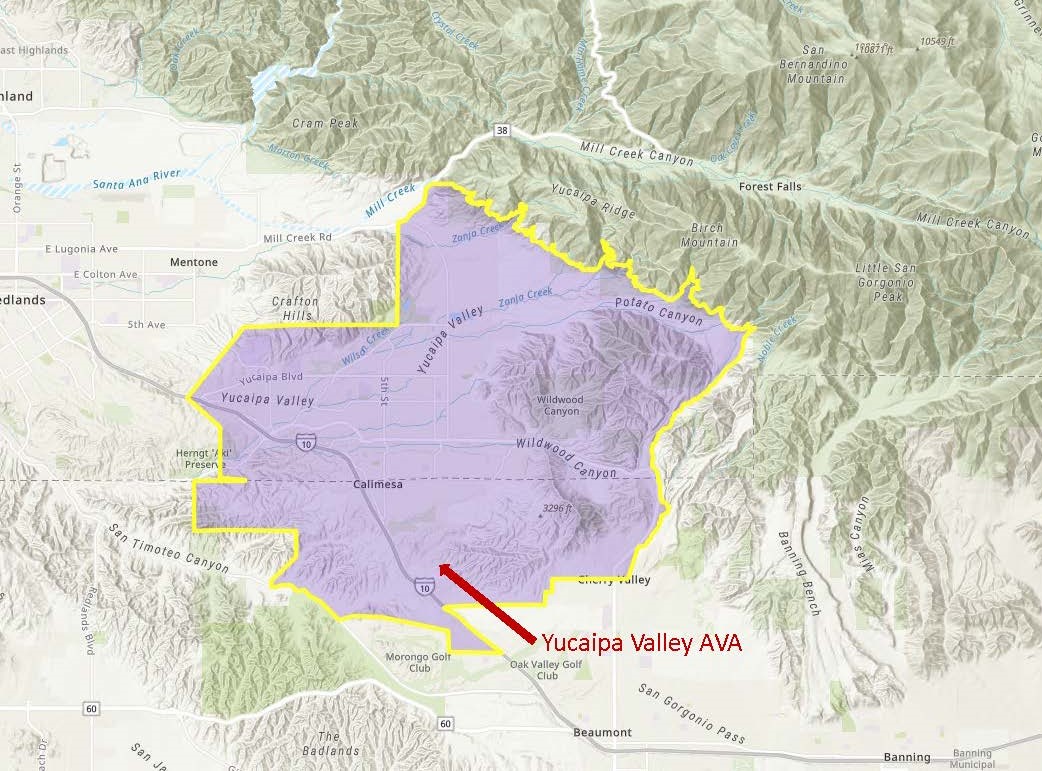
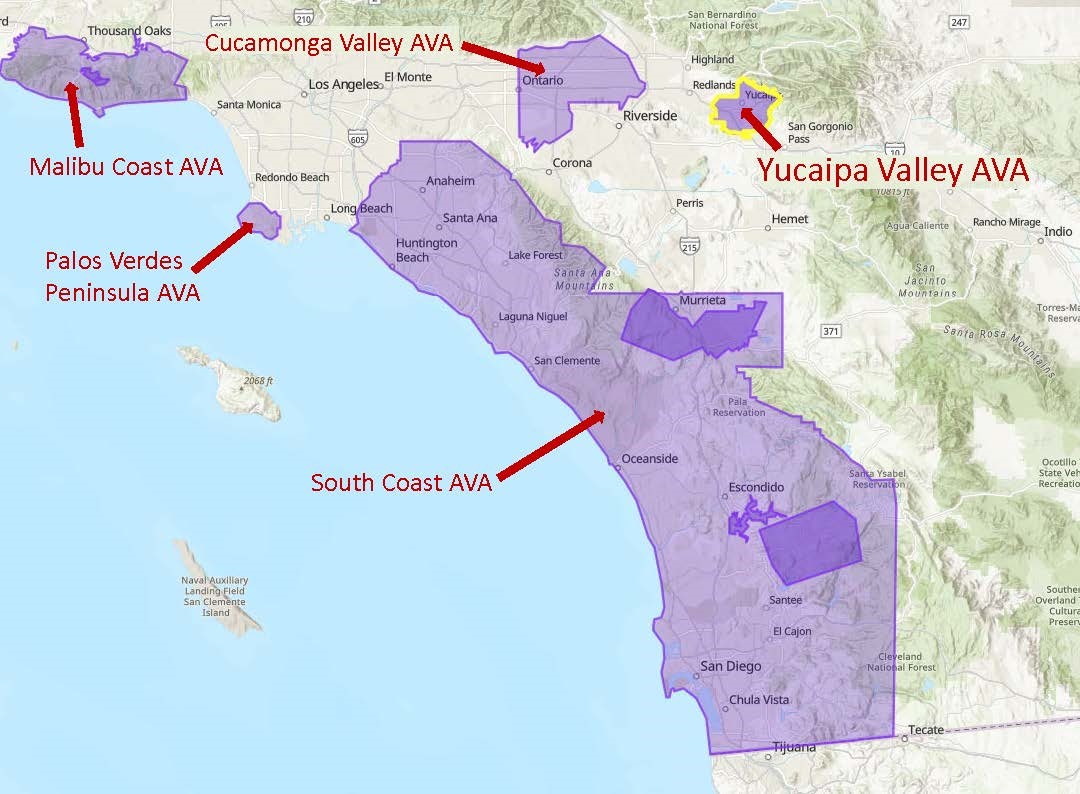
On April 25 (2024), the TTB (Alcohol and Tobacco Tax and Trade Bureau) of the United States announced the approval of the Yucaipa Valley American Viticultural Area (AVA). The new AVA covers an area within California’s San Bernardino County. The newly approved AVA is not located within, nor does it contain, any other viticultural areas.

According to the original petition, the distinguishing features of the Yucaipa Valley AVA include its elevation  and climate—as described below.

Elevation: The Yucaipa Valley AVA is comprised of rolling hills located within the foothills of the San Bernardino Mountains. Elevations in the area range from 2,000 feet to 4,600 feet above sea level. The significant elevation places the vineyards within an area that receives significant solar radiation, resulting in thick-skinned, flavorful grapes able to produce wine with considerable tannin and depth of color.
Base map via the TTB AVA Explorer (click to enlarge)

Base map via the TTB AVA Explorer (click to enlarge)

Climate: The inland location of the Yucaipa Valley AVA lends itself to an overall warm, dry climate. Summertime temperatures typically reach an average high of 97°F; in extreme cases temperatures have soared as high as 104°F. Rainfall is sparse during the growing season (averaging just over four inches per year), while the winters see most of the rainfall (typically averaging 15 inches per year, some of which may be snowfall).

The Yucaipa Valley AVA covers a total of 36,467 acres; the area currently contains 23 commercial vineyards as well as one winery—Suveg Cellars, founded in 2010. The leading grape varieties of the region include Cabernet Sauvignon, Merlot, Zinfandel, Syrah, Malbec, Nebbiolo, Barbera, Petite Sirah, and Chardonnay.

When the Yucaipa Valley AVA is brought into force—on May 28, 2024—the total number of AVAs in the United States will be 272; of these, 152 will be in California.

Welcome to the world, Yucaipa Valley AVA!

References/for more information:

Post authored by Jane A. Nickles…your blog administrator: jnickles@societyofwineeducators.org
Welcome to the world, Comptche AVA!

Base map via the TTB AVA Explorer (click to enlarge)

Base map via the TTB AVA Explorer (click to enlarge)

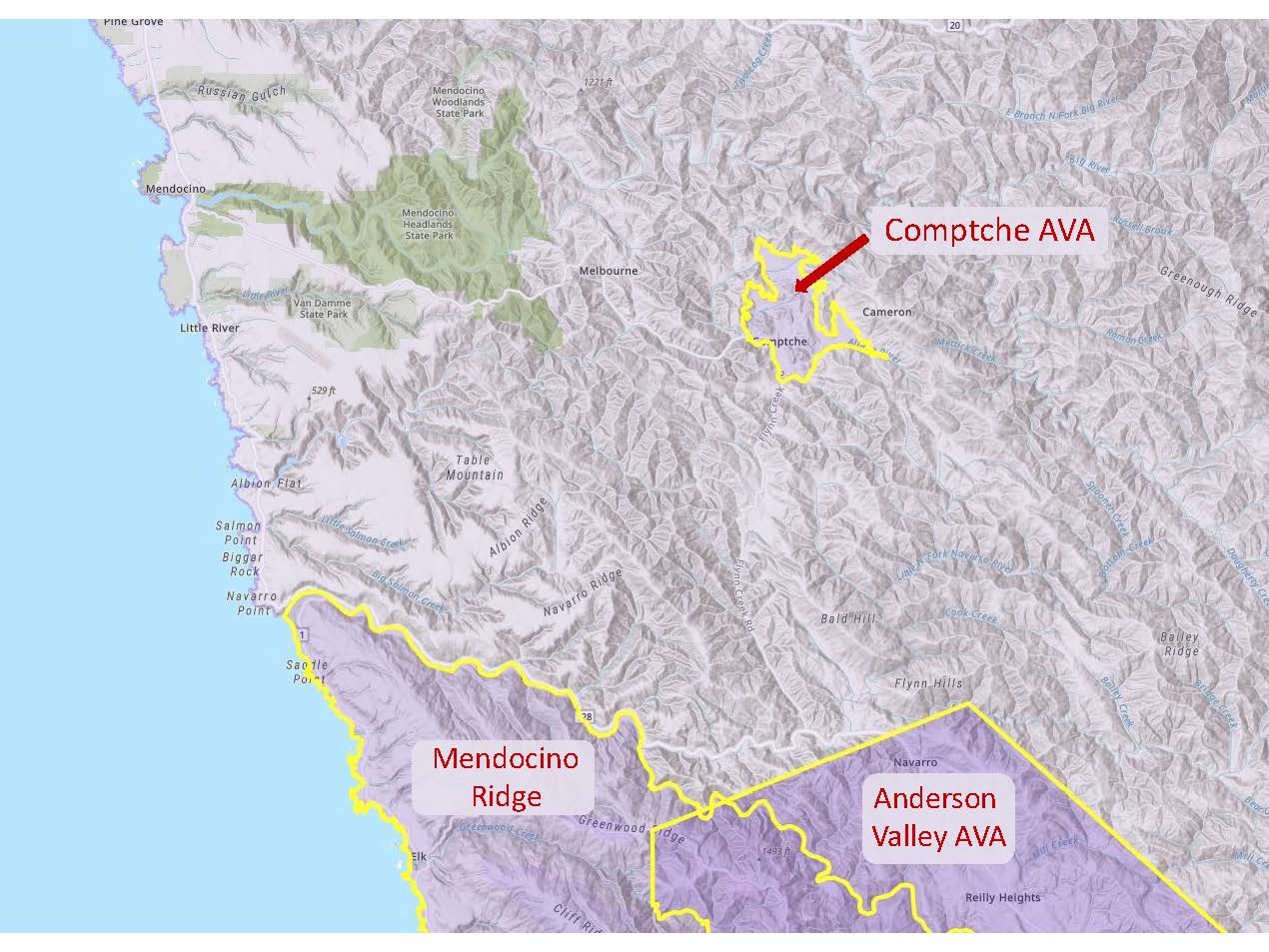
On April 8 (2024), the TTB (Alcohol and Tobacco Tax and Trade Bureau) of the United States announced the approval of the Comptche American Viticultural Area (AVA). The new AVA covers a small area within California’s Mendocino County.

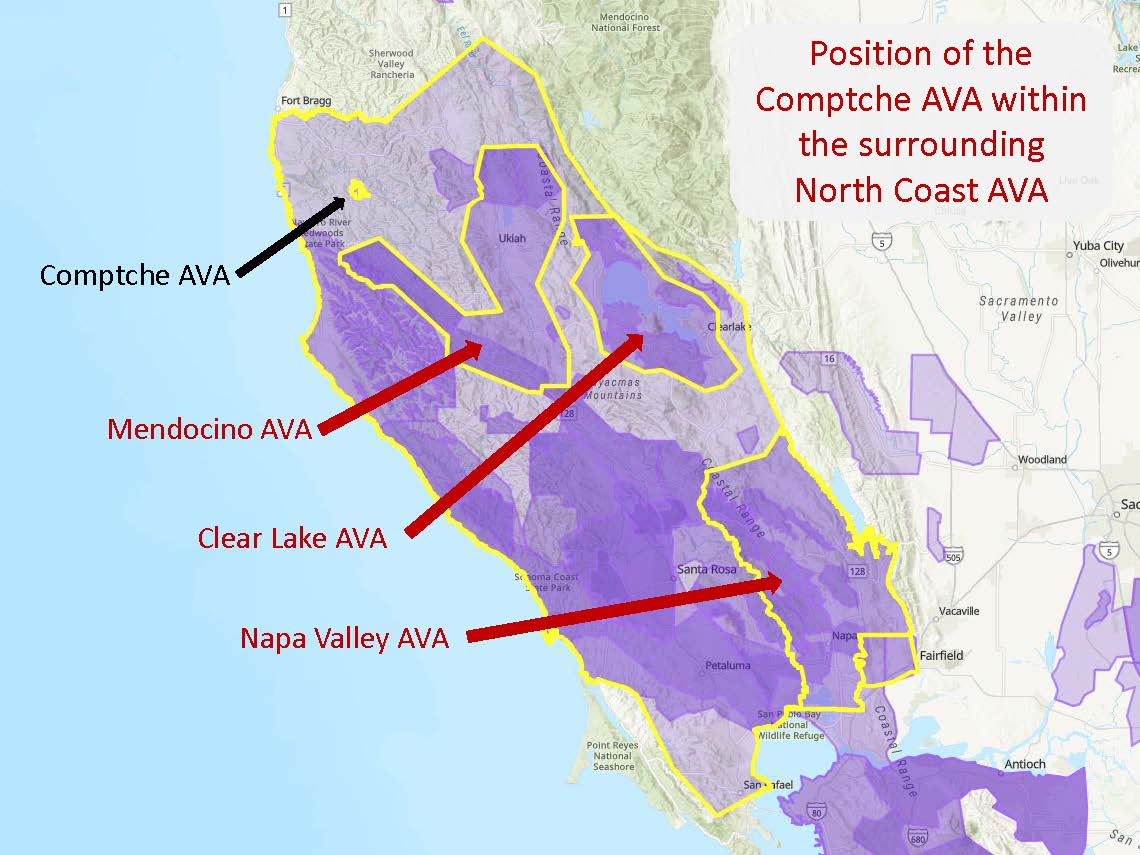
The newly approved Comptche AVA is positioned within the boundaries of the existing North Coast AVA. However, it has been determined that the climate and soil of the area are distinctly different from those of the surrounding AVA. As such, the TTB has determined that the Comptche AVA is not to be considered a sub-appellation (or otherwise part of) the North Coast AVA. According to the TTB, this means that “vintners will not be able to use ‘‘North Coast’’ as an appellation of origin for wines made primarily from grapes grown anywhere in the Comptche AVA.”

According to the original petition, the distinguishing features of the Comptche Costa AVA include its topography, soils, and climate—as described below.

Topography: The Comptche AVA—located about 11 miles inland from the Pacific Coast—consists of a low-elevation valley surrounded by heavily forested lands and short, steep ridges. The elevation of the area within the appellation ranges from 187 to 400 feet asl, with all the commercial vineyards (at this time) planted at elevations ranging from 220 and 250 feet asl. This unique topography contributes to the area’s cool climate, as cool air sinks into the valley from the surrounding (higher) elevations at night.

Soils: There are two main soil types found in the Comptche AVA. The first—known as Bearwallow–Wolfey soil—is found on the rolling hillsides of the area as a type of well-drained, shallow, prone to erosion, and infertile soil resting atop fractured sandstone. The second—Perrygulch Loam—is found on the valley floor as a deep, rich, soil with a high clay content.

Base map via the TTB AVA Explorer (click to enlarge)

Base map via the TTB AVA Explorer (click to enlarge)

Climate: The Comptche AVA is a good deal cooler than the surrounding area and the other (previously established) AVAs in Mendocino County. According to the petition, the Comptche AVA is cool enough to be considered a “borderline” climate for the cultivation of wine grapes and only cold-hardy varieties will prove to be successful. As such, Pinot Noir is the only variety currently grown (for commercial purposes) in the area.

The Comptche AVA is further distinguished as it is one of the few areas in the coastal section of Mendocino County where non-timber related agricultural activity is permitted. The new AVA is surrounded by land designated as a Timberland Production Zone and zoned solely for the growing and harvesting of timber (for no less than ten years from the time it was so designated).

The Comptche AVA covers a total of 1,422 acres; of these, approximately 30 acres are planted with vineyards. There are currently three commercial vineyards in the area—all of which sell their grapes to local wines (as there are no wineries currently operating within the new AVA. When the Comptche AVA is brought into force—on May 8, 2024—the total number of AVAs in the United States will be 271; of these, 151 will be in California.

According to the good folks at Tripadvisor, the locals pronounce it with a silent t, as “comp-chee.” The name derives from the Pomo word Compatche, meaning in the valley among the hills.

Welcome to the world, Comptche AVA!

References/for more information:

Post authored by Jane A. Nickles…your blog administrator: jnickles@societyofwineeducators.org