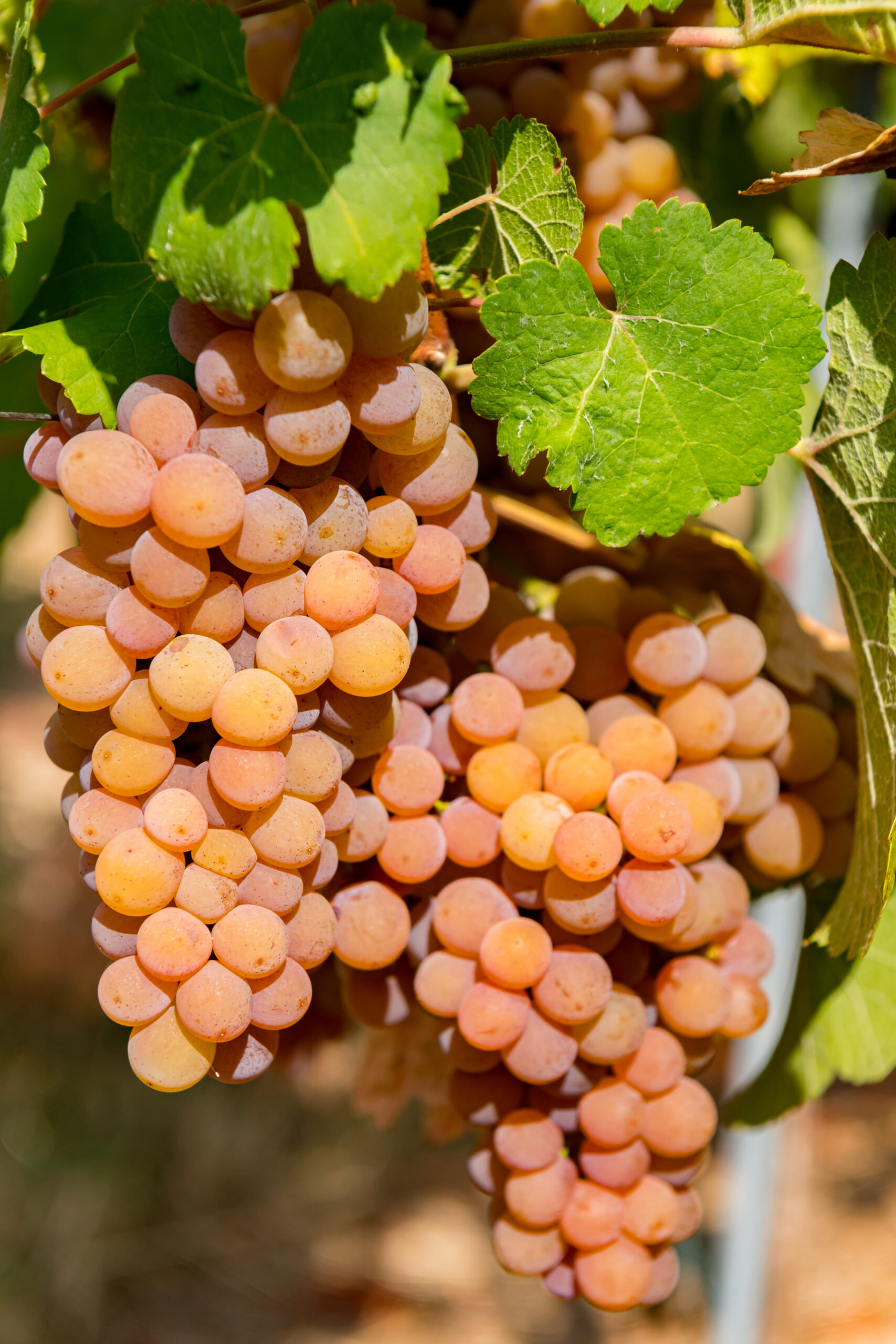
 News flash: as of June 11, 2026, the EU has approved a new grape for use in the production of Champagne! This new grape—Chardonnay Rosé, aka Pink Chardonnay—joins Pinot Noir, Meunier, Chardonnay (Blanc), Arbane, Petit Meslier, Pinot Blanc, and Pinot Gris as an approved grape variety of the Champagne AOC, with no limitations on its use in the vineyards or in the assemblage of the finished wine. (A ninth grape, Voltis, is approved for use in limited amounts.)
Chardonnay Rosé—first identified in Burgundy and Champagne in the early 1900s—is a natural, pink-berried mutation of the much better-known and widely grown white-berried Chardonnay (Chardonnay Blanc). In everything except the color of the grape skin—including life on the vine and the winemaking process—Chardonnay Rosé is considered to be similar to the blanc version of the grape. It is, however, sometimes deemed to be a bit fruitier and more acidic.
Chardonnay Rosé is (and will continue to be) a very obscure grape variety. It is found—in very small amounts—primarily around its native home of Chardonnay (a small town located in the Mâconnais region of Southern Burgundy), the result of natural mutation over the generations. Small amounts are also found in Champagne, and with these regulatory updates, they may now be included in the most famous wines of the region.
In both Burgundy and Champagne, a small group of winemakers have helped to preserve the grape variety as a way of honoring the grape’s heritage and protecting plant diversity. Welcome to the appellation, Chardonnay Rosé!
References/for more information:
- Champagne AOC updated June 2026
- https://www.champagne.fr/en/about-champagne/a-great-blended-wine/champagne-and-its-grape-varieties
Post authored by Jane A. Nickles…your blog administrator: jnickles@societyofwineeducators.org