Connecting the Bubbles: The Méthode Marlborough

image via: http://www.methodemarlborough.com/

image via: http://www.methodemarlborough.com/

The most successful people in the wine industry, whether they are conference speakers, teachers, or salespeople, are skilled at drawing connections and parallels within the world of wine.  Tying regions, styles, history, and current events together is thought provoking and shows a deeper understanding of the world around us.

On the surface, this post is about the newish Méthode Marlborough; however, the subject also brings into play the greater world of sparkling wine world, as well as the on-going debate of New World vs Old World.

The Méthode Marlborough is a society, created in September 2013, in order to promote the high-quality Traditional Method sparkling wines produced in Marlborough. The requirements for a Mèthod Marlborough sparkling wine include:

  • Produced using 100% Marlborough grapes
  • Made in Marlborough and exclusively produced using the Traditional Method of sparkling wine production
  • Made using the traditional Champagne varieties of Chardonnay, Pinot Noir, and Pinot Meunier
  • Aged in the bottle, on the lees, for a minimum of 18 months

There are currently 10 producers that are making this style of wine and have joined the club:

  • Allan Scott
  • Cloudy Bay Vineyards
  • Hunter’s Wines
  • Johanneshof Cellars
  • Lion
  • Nautilus Estate
  • No. 1 Family Estate
  • Spy Valley Winery
  • Summerhouse Wine Company
  • Tohu Wines
photo via: http://www.no1familyestate.co.nz/

photo via: http://www.no1familyestate.co.nz/

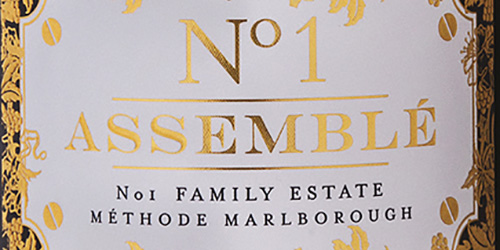
These wines are just now beginning to show up on store shelves. The first-ever Méthode Marlborough sparkler to be released was No. 1 Family Estate’s Assemblé, which was sabered in celebration on August 14th 2015.

It is perhaps fitting that No. 1 Family Estate, owned by Daniel Le Brun, was the first winery to release. Le Brun is, after all, part of a Champenois family, and has produced this style of Traditional Method sparkling wine from the three Champagne grapes in Marlborough since the winery was established in 1999.

This is impressive coming from a region that specializes in – and stakes its reputation on – Sauvignon Blanc. In fact, 77% of all the vineyards in Marlborough grow Sauvignon Blanc, and some of it is used to create delightful (if, admittedly, simple) Charmat method sparkling wines.

As lovely as these Charmat method sparkling wines are, it is just this type of wine from which the Méthode Marlborough producers are trying to distance themselves. South Africa was the first new world region to recognize the need to differentiate their quality sparkling wines, and, in 1992, created the Cap Classique Producers Association. However, Cap Classique rules are a bit less stringent that those of the Méthode Marlborough is attempting to do: Cap Classique can come from anywhere in the large, diverse Western Cape Geographical Unit, the lees-aging requirement is only 12 months, and they allow the use of Sauvignon Blanc and Chenin Blanc in addition to Chardonnay and Pinot Noir.
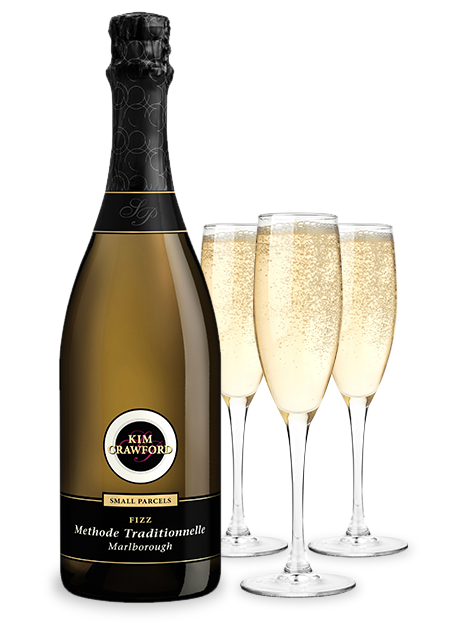
image via: http://www.kimcrawfordwines.com/us

image via: http://www.kimcrawfordwines.com/us

Perhaps – and this is where the “Old World/New World” aspect of this discussion begins – a set of Old World-style quality controls is ever more important in a category of wine where the production methods can be elusive, the grapes in the blend are a mystery, and vintages are rarely discussed or disclosed. Time spent on the lees, which is a major component of a finished sparkling wine’s flavor, is also not discussed. Essentially, we’re missing the what, where, when, and why of the wine. (Thankfully, the who is published on the label.)

Controls such as these are built into the production standards of the DOCs and the AOCs of the Old World, so the customer at least has a good idea of what they are getting in the bottle, and adherence to their standards is mandatory if the producer wants to use their “stamp of approval” on the label. However, in the case of New World producers bonding together for a marketing and consumer-driven end, admission to the club is voluntary.  As such, there will always be “rebels” who refuse to join – perhaps because they believe their brand is stronger that of the association – such as Kim Crawford’s “Fizz,” produced using the Traditional Method from Chardonnay and Pinot Noir.

The topic brings up many questions. Will these New World quality alliances that imitate Old World appellations will stand the test of time.  How much do we rely on the Canadian VQA or the San Rafael DOC in Mendoza over individual brands? Will more regions around the world band together to “guarantee” quality in the nebulous world of sparkling wine?  (I’m keeping my eye on England, Brazil, and Tasmania.)

We wait with curious minds and palates as the ten producers of Méthode Marlborough captivate our attention – and we promise to bring the bubbles, no matter what.

For more information:

MarkPost authored by Mark Rashap, CWE. Mark has, over the past ten years, been in the wine world in a number of capacities including studying wine management in Buenos Aires, being an assistant winemaker at Nota Bene Cellars in Washington State, founding his own wine brokerage, and working for Texas-based retail giant Spec’s as an educator for the staff and public.

In August of 2015, Mark joined the team of the Society of Wine Educators as Marketing Coordinator to foster wine education across the country.


Uisce Beatha Eireannach Goes Legit!

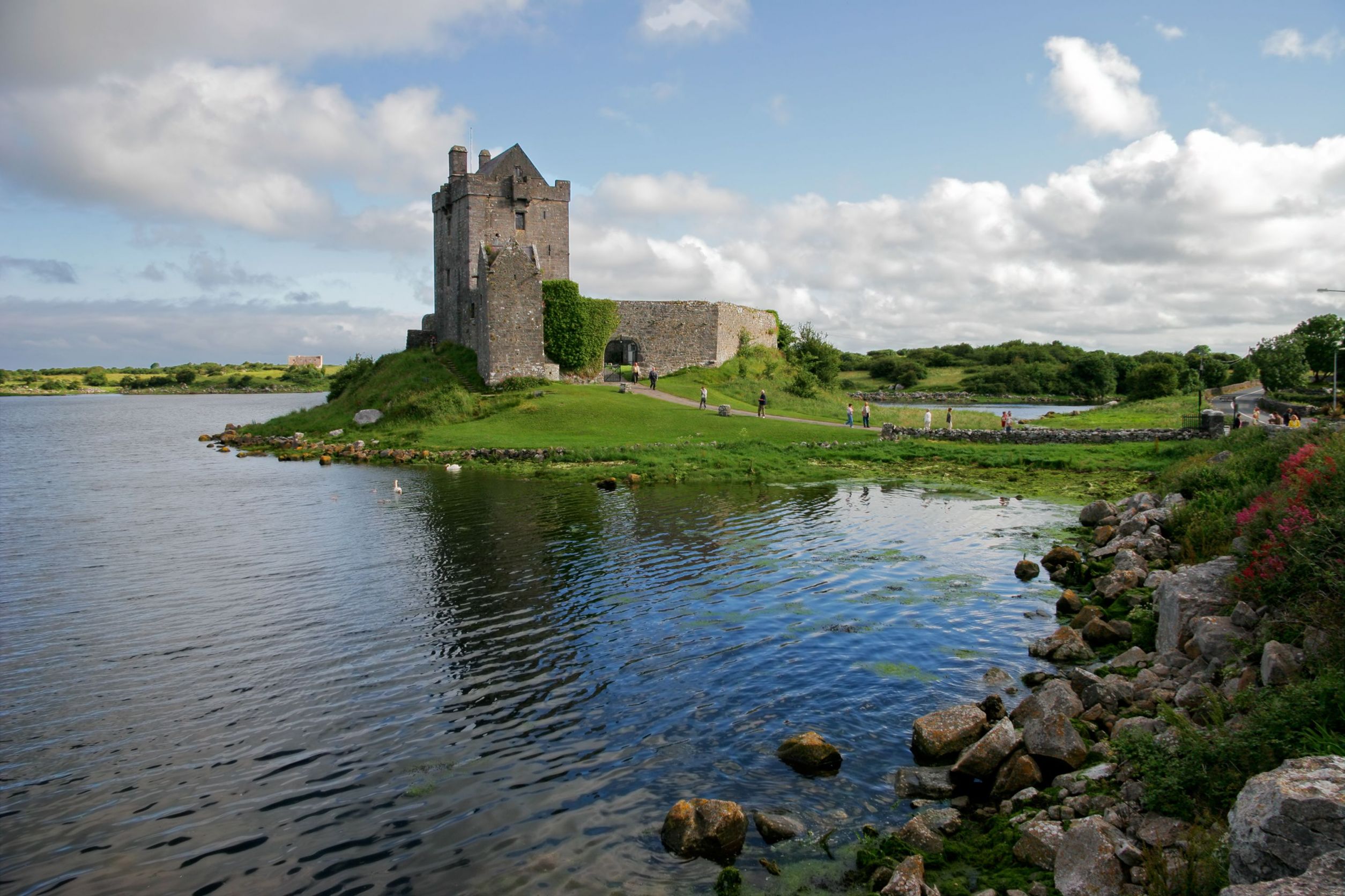
Dunguaire Castle, County Galway

Dunguaire Castle, County Galway

Ok, for the record, Uisce Beatha Eireannach – Irish whiskey – has always been legit! However, soon, the legal standards that regulate the spirit will be greatly expanded and enhanced.

As every good CSS student knows, Irish whiskey has been defined and regulated since 1980 by the Irish Whiskey Act.

The Irish Whiskey Act of 1980 is a fairly concise document – no more than one page long – and states that Irish whiskey must:

  • Be distilled in Ireland from a mash of cereal grains
  • Be distilled to an alcoholic strength of less than 94.8% alcohol by volume (189.6 proof)
  • Be distilled in such a way so that the distillate has an aroma and flavor derived from the materials used
  • Contain no additives except for water and caramel coloring
  • Be stored in wooden casks in Ireland for no less than three years

The act further goes on to define blended Irish whiskey as a spirit which must be comprised of at least two different distillates. And that’s it!

However…as of October 30, 2015, a new set of technical standards will be implemented in accordance with the European Union requirements for the PGI status of Irish whiskey.

These standards expand upon the Irish Whiskey Act of 1980 and include the following regulations:

  • Irish whiskey must be bottled in Ireland or, if not bottled in Ireland, it must be shipped off the island in inert bulk containers and subject to company controls and strict verification to ensure the safety and integrity of the product.
  • Irish whiskey is not allowed to be exported from Ireland in any type of wooden container.
.

.

These new regulations also provide definitions for the following types of Irish whiskey: 

Irish Malt Whiskey: Irish malt whiskey must be made from 100% malted barley. The wort is separated from the solids before fermentation. Irish malt whiskey must be distilled in pot stills. The traditional practice is to use smaller pot stills in order to encourage complex flavors and a full, oily texture, however, there are no requirements as to the size of the still.  Irish malt whiskey is traditionally triple-distilled, although double distillation may be used.

Irish Grain Whiskey: Irish grain whiskey is produced from a mash containing a maximum of 30% malted barley. The remainder is made up of unmalted cereal grains – typically maize, wheat, or barley. The mash typically does not undergo any separation of the solids from the liquids before distillation. This type of whiskey is continuously distilled using column stills.  Irish grain whiskey may have either a light or a full flavor profile, depending on the cut points and other techniques employed by the distiller.

Irish Pot Still Whiskey:  Irish pot still whiskey is required to be produced using a mash containing a minimum of 30% malted barley and a minimum of 30% unmalted barley. The remainder of the mash may be either malted or unmalted barley, and may include up to 5% other unmalted cereal grains (usually oats or rye). The wort is separated from the solids before fermentation. This type of whiskey must be batch distilled in pot stills. The traditional practice is triple-distillation in large pot stills, although double distillation may also be employed and there are no requirements as to the size of the still. 

.

.

Blended Irish Whiskey: Blended Irish whiskey is a blend of two or more different whiskey types, which must be made in accordance with the standards stated above, and which may include Irish malt whiskey, Irish grain whiskey, and/or Irish pot still whiskey. The whiskeys that make up the blend may also be chosen from different distilleries, ages, types of cask finish, and flavor profiles in order to achieve the desired flavor and consistency.  Blended Irish whiskey tends to be smooth and mellow with a range of flavors, and a light, silky mouth feel.

So on October 30, 2015 (and maybe every other day of the year), raise a glass – of Jameson, Tullamore DEW, Kilbeggan, or whatever you choose – and toast your friends “Sláinte mhaith!”

Post authored by Jane A. Nickles, your blog administrator

For more information:

Are you interested in being a guest blogger or a guest SWEbinar presenter for SWE?  Click here for more information!

Congratulations to our First Class of Certified Spirits Educators!

During our 2015 conference in New Orleans, the Society of Wine Educators administered the first ever Certified Spirits Educator exam to a group of leading industry professionals.  Six candidates successfully demonstrated superior theoretical knowledge through multiple choice and essay questions, tasting acumen through accurate blind identifications and rationales, presentation skills to a targeted audience, and proof of responsible beverage service.  For more information on the rigors of this exam click here.

Please, meet and congratulate the first group of official Certified Spirits Educators!

.

.

Hoke Harden, CSW, CSE, B.N.I.C. Certified Cognac Educator, and French Wine ScholarAn enthusiastic lover of wine and spirits, Mr. Harden left a career in academia to follow his other muse for the last 27 years, trekking around the world to the great producing regions. Recently referred to as a veritable walking omnibus of wine and spirits knowledge, he has experienced every possible facet of the world of wine and spirits as a retailer, restaurateur, bartender, buyer, wholesaler, supplier, marketer, critic, writer, competition judge and an educator. He is currently with Elixir Vitae Wine & Spirits Consultants, a member of the Society of Wine Educators, Wine & Spirits Instructor at Mt. Hood Community College, and a Master Instructor with the French Wine Academy.

Hoke on the CSE Exam: The new Certified Spirits Educator program is a highly complex self-study program offered to professional spirits educators and industry professionals; the equivalent to the Society’s highly acclaimed Certified Wine Educator. Other programs dabble in spirits or include ancillary courses in the basics; the CSE focuses singularly on the world of spirits.

daubenmire, experts photos shoot, 2014

daubenmire, experts photos shoot, 2014

Linda Pettine, CWE, CSELinda Pettine is an Associate Professor for the College of Culinary Arts, Providence Campus, Johnson & Wales University. She has been at Johnson & Wales University since 2000, where she teaches in the Beverage & Dining Service Department. She was recognized for her teaching skills with the Beverage & Dining Services Department Service Award in 2001 and Teacher of the Year in 2007.  With over 20 years of industry experience, Ms. Pettine operated and managed fine dining restaurants in the south suburbs of Boston before joining the faculty at Johnson & Wales. Prior to that, she was a sales associate at Branded Liquors in Westwood, Mass. Linda is an active member of the Society of Wine Educators, Women Chef’s & Restaurateurs, and the USBG. She is a Certified Wine Educator, Certified Specialist of Spirits, and a Certified Hospitality Educator. Pettine recently became a Certified Cognac Educator and is certified through the Ėcole du Vin as an international Bordeaux educator. She holds degrees from Massachusetts Bay Community College, North Adams State College, and Johnson & Wales University.

Linda on the CSE Exam: I am fortunate in my like that I have had the opportunity to pursue my passions, “wine and spirits”.  The time and effort studying for the CSE exam was rigorous and demanding utilizing a variety of study techniques and tasting formats.  However, when you are passionate about the subject, it seems less like work and more like a journey.  I am thrilled to have arrived at my destination!

.

.

Lisa Graziano CSW, CSELisa Graziano grew up with a German father and Irish-American mother in Los Angeles, California. An education in beer, wine and spirits came with this upbringing. She has pursued the study of wine and spirits seriously for the past eight years, earning both Certified Specialist of Wine and Spirits from the Society of Wine Educators, and currently works as a retail hand seller for Gallo Fine Wines and consults for Bottle Shop 33 in Denver. Her current passion is craft spirits and educating people about them – and she’s obviously great at it!

Lisa on the CSE Exam: The CSE exam was certainly challenging!  I ate, slept, studied and tasted spirits intensely for three months to prepare.  The SWE online Spirits Academy was a helpful tool in preparing for the exam as was the list of iconic spirits and suggested reading list. 

.

.

Harriet Lembeck, CWE, CSEHarriet Lembeck is a prominent wine and spirits educator and writer. She is President of the Wine & Spirits Program, headquartered in New York City, and was the Director of The New School Wine Classes for their 18-year duration. She has revised and updated the textbook “Grossman’s Guide to Wines, Beers, and Spirits”, is a favorite speaker on wine and spirits at SWE Conferences, and is a contributing editor to Beverage Dynamics Magazine.

Harriet on the CSE exam: I think that the Certified Spirits Credential is very important for those who teach spirits as well as wine, and for those who already have the Certified Wine Educator credential, it completes the picture. The test was very comprehensive. Multiple choice questions (not as easy as one might think), writing an essay, and then completing two differently-styled tastings made for a long day, but each element was necessary for a candidate to illustrate familiarity with the subject of spirits.

.

.

Ira Norof, CWE, CSEIn 1976 Ira’s wine & spirits career began in a retail wine shop.   As his knowledge and passion for the product grew, he eventually became a Sommelier in a Beverly Hills Restaurant.   In 1983, he was hired by Southern Wine & Spirits of California, and in 1996 he was named the Director of Education.  His illustrious career has taken him to visit most of the major wine regions in Europe and the Americas.  He attained the CWE (Certified Wine Educator credential) in 1999.  He holds a diploma from the Bordeaux Wine School and is a certified International Bordeaux Educator, as well as a certified Cognac Educator as ordained by le Bureau National Interprofessionnel du Cognac. He is a guest lecturer at Cal Poly Pomona’s School of Hospitality each semester. Ira served as the President of the Society of Wine Educators from 2010 – 2013 and has been on the Board of Directors of the Los Angeles Chapter of the AIWF and was a member of the Bon Appetit Tasting Panel.  Ira remains actively involved in many wine-related charity events throughout the country.

Ira on the CSE exam: I am privileged to have been part of the first CSE exam and will continue to mentor within our California organization on both wine and spirits education. We have over 200 CSW and/or CSS certified employees in the state as well as 4 CWEs. I look forward to help increase those numbers in the coming months.

.

.

Jane A. Nickles, CWE, CSE, MBA – “Miss Jane” is the Director of Education for the Society of Wine Educators and in charge of all educational materials such as study guides, workbooks and online courses as well as exams and certification instruments.  In the past two years, she has introduced SWEbinars, ebooks, online prep classes, our blog, and computer-based testing to SWE.  Before working for SWE, she  created and taught wine classes for 20 years at Le Cordon Bleu Colleges, was the 2012 Banfi award winner for best score on the CWE exam, won the 2008 WOSA wine essay award (the prize for which was a 2-week tour of the winelands of South Africa), and has published countless textbooks and journals, including the latest editions of the SWE Study Guides.

Miss Jane on the CSE exam: Over the past few years, the CSS program has grown rapidly, and we have received an increasing number of requests for more in-depth programs and a higher level certification in spirits. One could even say the CSE was created due to popular demand!

Congratulations to our new CSEs! Now…who will be next?

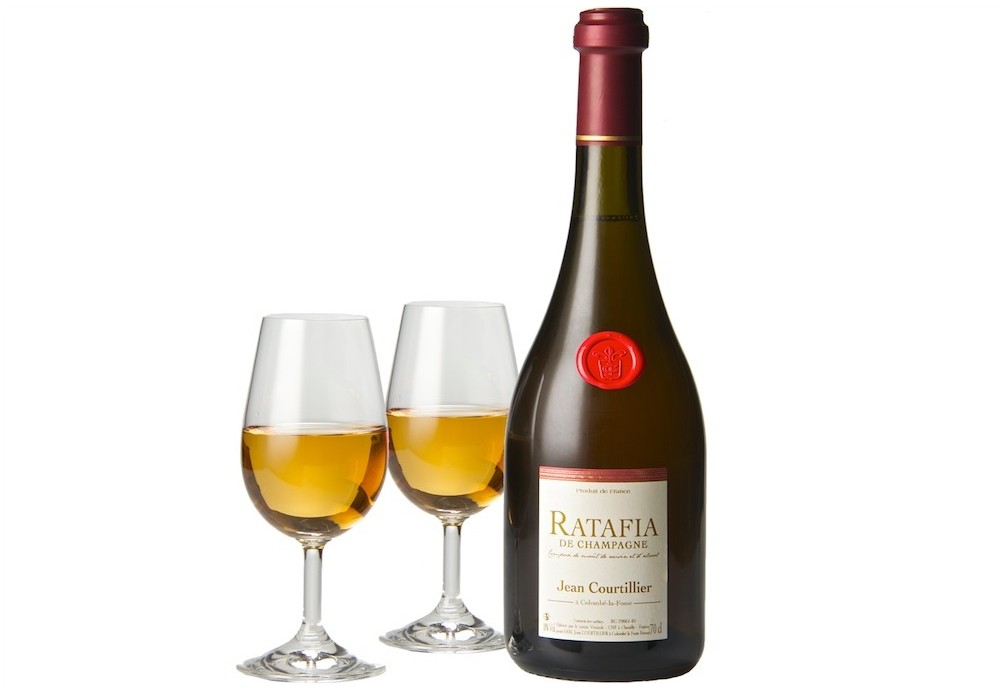
A New PGI – Ratafia de Champagne!

http://www.champagne-courtillier.com

photo via: http://www.champagne-courtillier.com

Quick! If you are a CSW, tell me – what is Pineau des Charentes? If you are a CSS, answer me this: What is Pommeau de Normandie?

The answer to both questions is: a sweet, fortified, wine-based beverage, typically referred to in the European Union as a Vin de Liqueur.*

Now, here’s my next question: What is Ratafia de Champagne?

Answer: A Vin de Liqueur, produced in the Champagne region that – after an 800-year history of production – just received its first-even PGI status as of August 27, 2015. Bottles of Ratafia de Champagne, alternatively known as Ratafia Champenois, will be eligible for PGI status as of the 2016 release.

The new PGI is actually part of a larger project, begun back in June of 2014 when a group representing distillers, wine growers, and wine producers in the Champagne region created an organization known as the “Association of Producers of Spirits of the Champagne Geographical Indication” (Boissons Spiritueuses Champenoises). Among the goals of the group was to obtain PGI status for Marc de Champagne, Fine de Champagne, and Ratafia de Champagne. PGI status was obtained for Marc de Champagne in January 2015; the PGI for Fine de Champagne was approved in February 2015.

The regulations for Ratafia de Champagne PGI specify that the product is produced using the three main grapes of the Champagne region – Pinot Noir, Pinot Meunier, and Chardonnay. The juice that will be fortified and made into Ratafia is pressed after the juice to be used in the area’s famous sparkling wine is pressed – during the first part of the final – or rebèche – pressing.  The juice is then fortified with grape-based brandy of the region, which is also produced from the rebèche juice.  Production of Ratafia de Champagne will be limited to 15 million bottles – about 6% of the total output of the AOC – per year.

*More specifically, Pineau des Charentes is a Vin de Liqueur produced in the Cognac (Charentes) region of France, from must freshly pressed from the allowed grapes of the region. The must is fortified with Cognac, and the resulting beverage – at 16–22% alcohol by volume – is aged for at least 18 months, with a minimum of 12 in oak.  Being produced from unfermented must, Pineau des Charentes can also be classified as a mistelle.

*Pommeau, also technically a mistelle, is made in the Calvados region with unfermented apple juice, fortified with one-year-old Calvados. The resulting mixture, which has 16-18% alcohol by volume, is then aged in oak barrels for a minimum of 14 months.

Post authored by Jane A. Nickles – your blog administrator!


And the Grand Award Goes to…Cristina Mariani-May of Banfi Vintners!

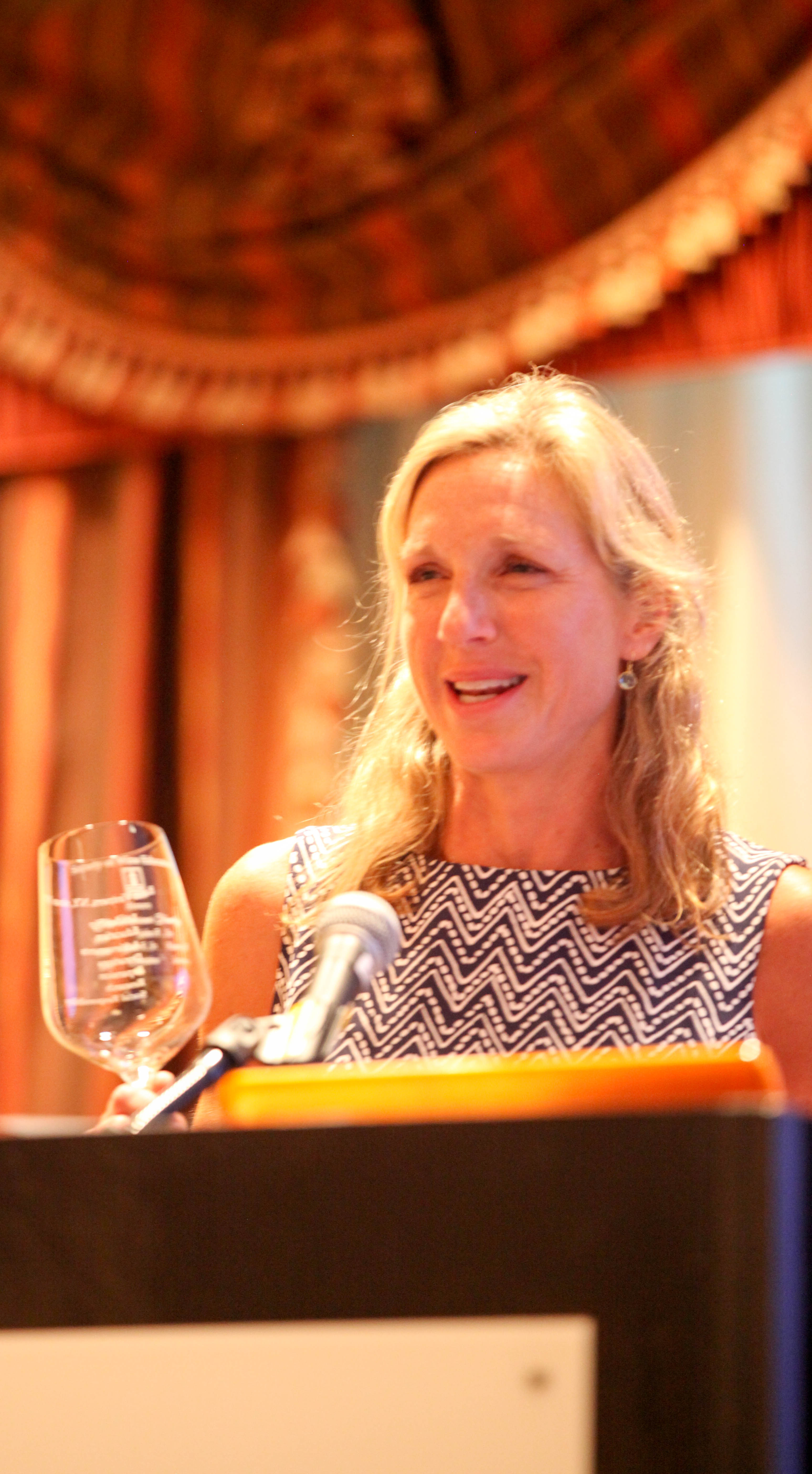
Christina Mariani-May accepts SWE's Grand Award on behalf of Banfi Vintners

Cristina Mariani-May accepts SWE’s Grand Award on behalf of Banfi Vintners

As part of the Society of Wine Educator’s 39th Annual Conference held in New Orleans, the Society’s Annual Grand Award was presented to Cristina Mariani-May of Banfi Vintners. Ms. Mariani-May is the youngest daughter of John F. Mariani, Junior. Together with her cousin James Mariani, she currently serves as the co-CEO of Banfi Vinters, and represents the third generation of family leadership in the company founded by their grandfather, John Mariani, Sr.

Granted annually to a deserving wine industry leader for lifetime achievement, the prestigious “Grand Award” has in the past been presented to such wine luminaries as Robert Mondavi, Sandro Boscaini, Jancis Robinson, Warren Winiarski, Carol Meredith, and Mike Grgich, among others.

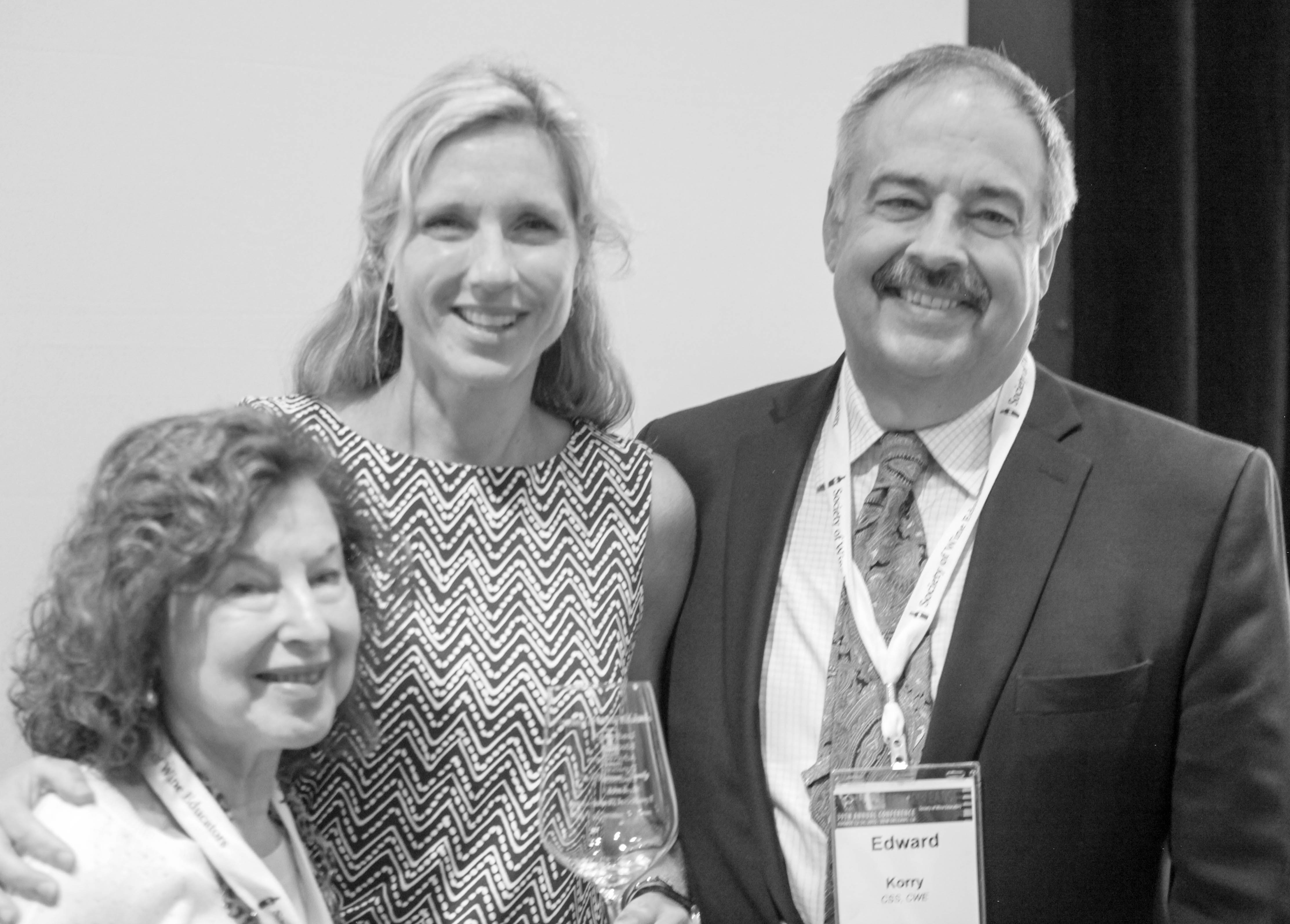
“The Society of Wine Educators is proud to present Cristina Mariani May, as the co-CEO of Banfi Vintners and its public representative, with the SWE Grand Award for 2015,” said Edward Korry, CHE, CSS, CWE, President, Board of Directors, Society of Wine Educators. “Banfi Vintners has been and is a model for wine education worldwide in terms of its commitment, outreach, and generosity.”

Banfi Vintners was founded in 1919 by John F. Mariani, Sr., who named the company after his Aunt Teodolina Banfi. Mariani’s sons John, Jr. and Harry expanded the company’s Italian import portfolio to Germany, Switzerland, and France starting in the mid-1950s, before introducing the immensely popular Riunite Lambrusco, which has topped the imported red wine category over the past four decades.

In 1978, the Mariani family founded Castello Banfi in Montalcino, Tuscany, Italy’s most honored estate and the inspiration for a renaissance in Tuscan winemaking, and in 1988, began working with the family leadership of Concha y Toro, catapulting that brand to its own leadership position and introducing Americans to Chilean wine.

.

.

Castello Banfi is internationally acclaimed for its clonal research to improve upon the region’s historical Brunello di Montalcino, and making premier quality wines that are low in sulfites and histamines. It was the first winery in the world to be awarded international recognition for exceptional environmental, ethical, and social responsibility (ISO 14001 and SA8000) as well as an international leader in customer satisfaction (ISO 9001:2000).

Encouraged by their success in business, the Mariani family established the Banfi Foundation and from its earnings contributes to leading national charities and higher education through scholarships, fellowships and grants-in-aid. To promote greater knowledge of the fine wines of Europe and the US, the Foundation has endowed the Banfi Chair of Wine Education at Cornell University and provided funding for a Chair of Economics at Colgate University themed to the American economy and the importance of the free enterprise system. In addition, each year the Foundation provides scholarships for students at select hospitality and business colleges to travel to Italy for seminars on that nation’s wine and food culture.

Barbera goes Solo in new Nizza DOCG

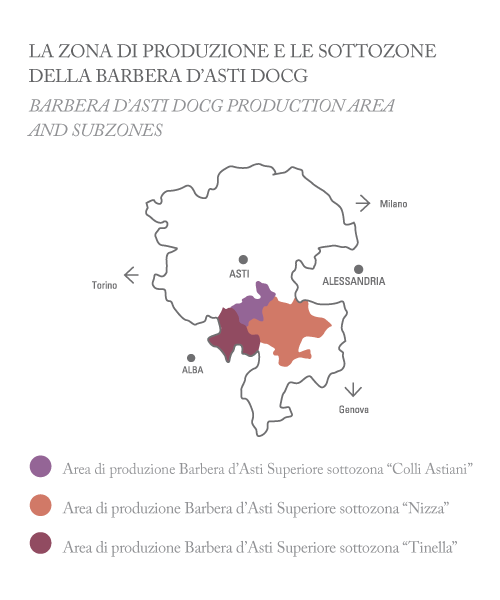
Nizza map via: http://www.viniastimonferrato.it/en/the-wines/barbera-dasti/general-notes.html

Nizza map via: http://www.viniastimonferrato.it/en/the-wines/barbera-dasti/general-notes.html

Today we have a guest post from Mark Rashap, CWE…

It’s time for Nizza Barbera to take its rightful place in center stage!

Effective as of the 2014 harvest, the consortium that oversees wine laws for Asti and the Monferrato Hills in Piedmont promoted Nizza Monferrato and 18 surrounding villages (comuni) from a mere subzone of the Barbera d’Asti DOCG to a DOCG of their own: the autonomous Nizza DOCG.  This promotion deserves particular attention from the wine community because it highlights the evolution of many European wine appellations, as well as Italy’s insistence to snub its nose at the EU’s DOP.

The most obvious marker of the Nizza DOCG is that all the grapes must be grown within a delineated geographic zone, which was already established, along with Tinella and Colli Astiani, as a subzone of Barbera d’Asti DOCG Superiore    The new DOCG gets a bit particular, however, as every vineyard destined for the Nizza DOCG must be registered with the Consortium and tout particular soils and exposures.  Vines must be entirely estate, planted on the slopes of hills facing south-east to south-west. The required density is at least 4,000 vines per hectare, and harvest must be done entirely by hand.   This limits the total vineyard acreage of the DOCG to 250 ha (620 acres) – roughly the total area of Chateau Margaux.

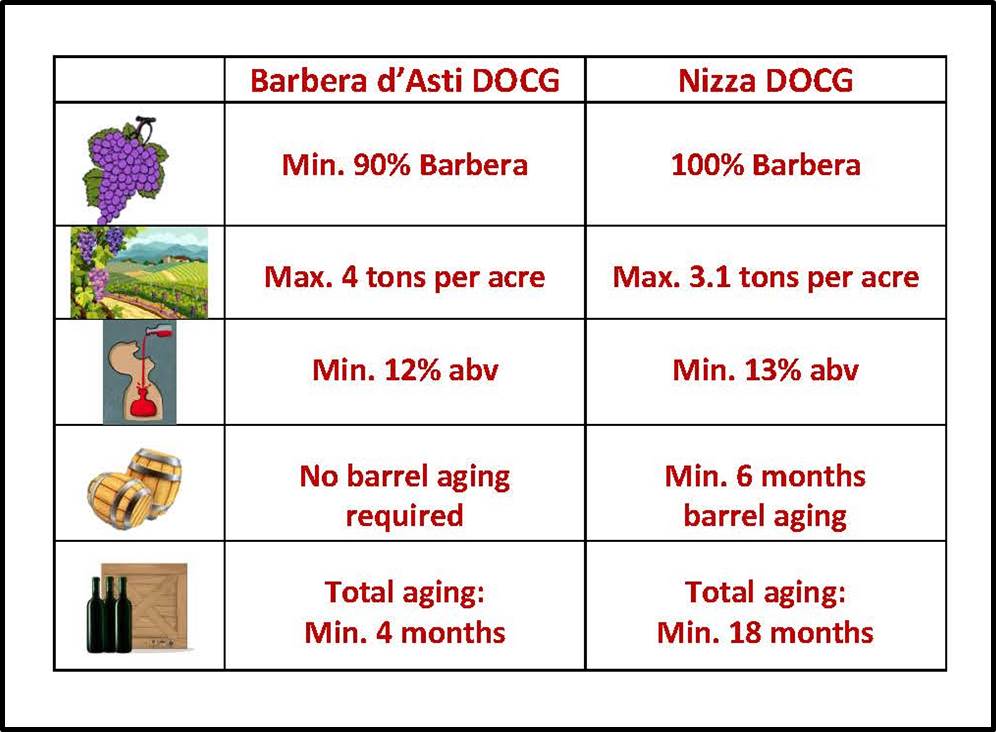
In the winery, there are additional controls in place to ensure quality and to differentiate the Nizza DOCG from the greater Barbera d’Asti DOCG.  Perhaps most importantly, Nizza must be 100% Barbera compared to the 90% for Barbera d’Asti.  Yields are capped at 3.1 tons per acre, and there is a minimum ageing of 18 months (6 in barrel) before the wine is released to market.  Finally, there is an organoleptic and laboratory analysis to make sure the finished wine has met the standards put forth by the Consortium. An interesting facet of this analysis that the minimum requirement of 26 g/L “dry extract.”

.

.

If you don’t place importance on minutiae, then the take-home is that Piedmont is dedicated to making some serious Barbera. Furthermore, it adds to the modern trend that “controlled” regions in Europe are tightening their quality standards, and promoting sub-regions to higher categories when – perhaps – their neighbors have suffered from over-production or unscrupulous producers.  Other examples of this trend include Chianti Classico’s addition of the Gran Selezione category of quality, and the breakup of the Coteaux de Languedoc into individual AOC’s (blog post to come).

In the case of Nizza, if the year or producer’s bounty is not up to par, then the wine can be de-classified to Barbera d’Asti DOCG, Monferrato Rosso DOC, Piemonte Barbera DOC, or Piemonte Rosso DOC, thus allowing the image of Nizza to stay intact.

We also must be amused by Italy’s complete rejection of the EU’s Denominazione di Origene Protetta terminology because there is no means of distinguishing between the DOC and DOCG tiers.  As we know, with the re-organization of the EU’s agricultural standards, it was left open for individual producer-countries the two systems of nomenclature. Italy was thus allowed to continue to apply for new DOCGs – as is apparent with Nizza – the newest, and the 74th.  Perhaps…Tinella and Colli Astiani will be next?

For more information: