Dispatch from Soave (and 33 New Crus)

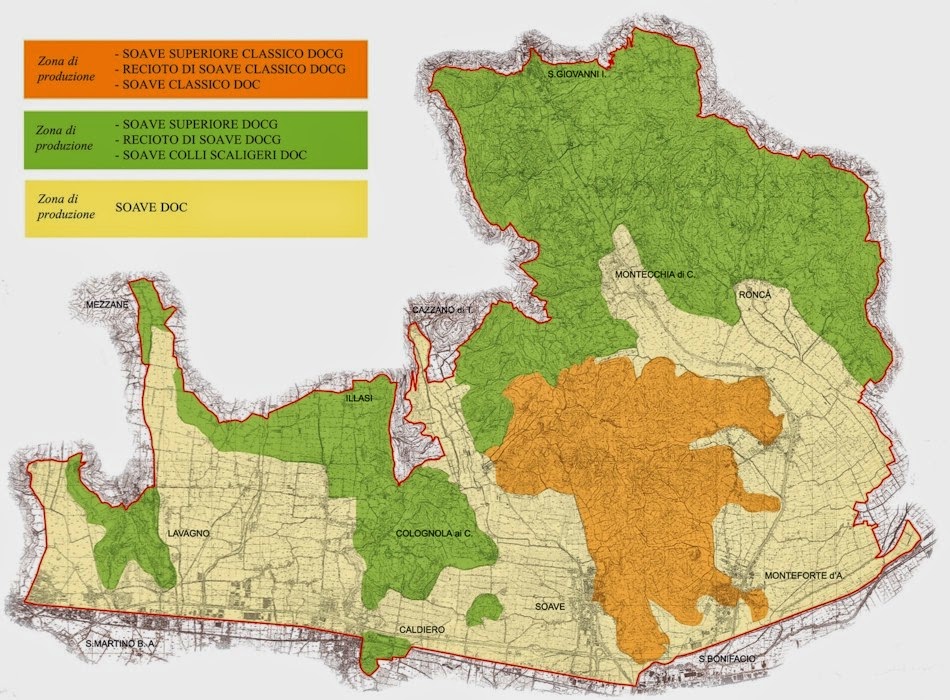
Map of the traditional regions of Soave/credit: Casa del Vino (own work) via Wikimedia Commons

Map of the traditional regions of Soave/credit: Casa del Vino (own work) via Wikimedia Commons

Soave DOC—Veneto’s beloved Garganega-based white wine—has entered a new phase with the approval of 33 new subzones. The new geographical indications were approved by the Italian Ministry of Agriculture in October of 2019—and as of March 2020, they have been approved and published in the Official Journal of the European Union.

The Soave zone has traditionally contained two subzones: Soave Classico and Soave Colli Scaligeri. The Classico zone—the original, central part of the region located about 10 miles east of the city of Verona—consists of an expanse of rolling hills within the communes of Soave and Monteforte d’Alpone. The discontinuous Colli Scaligeri subzone contains a series of hillsides surrounding the city of Verona. The name is a reference to the Della Scala family (the Scaligeri)—former Lords of Verona and once-upon-a-time owners of the land.

Vigne del Soave—a comprehensive project to map the Soave region by soil types, elevation, micro-climate, topography, and historical usage—has been in the works via the Soave Consortium for over a decade. The project was completed in 2019 with the formal designation of 33 unique geographical subzones officially known as “Additional Geographical Units” or Unità Geografica Aggiuntiva.  

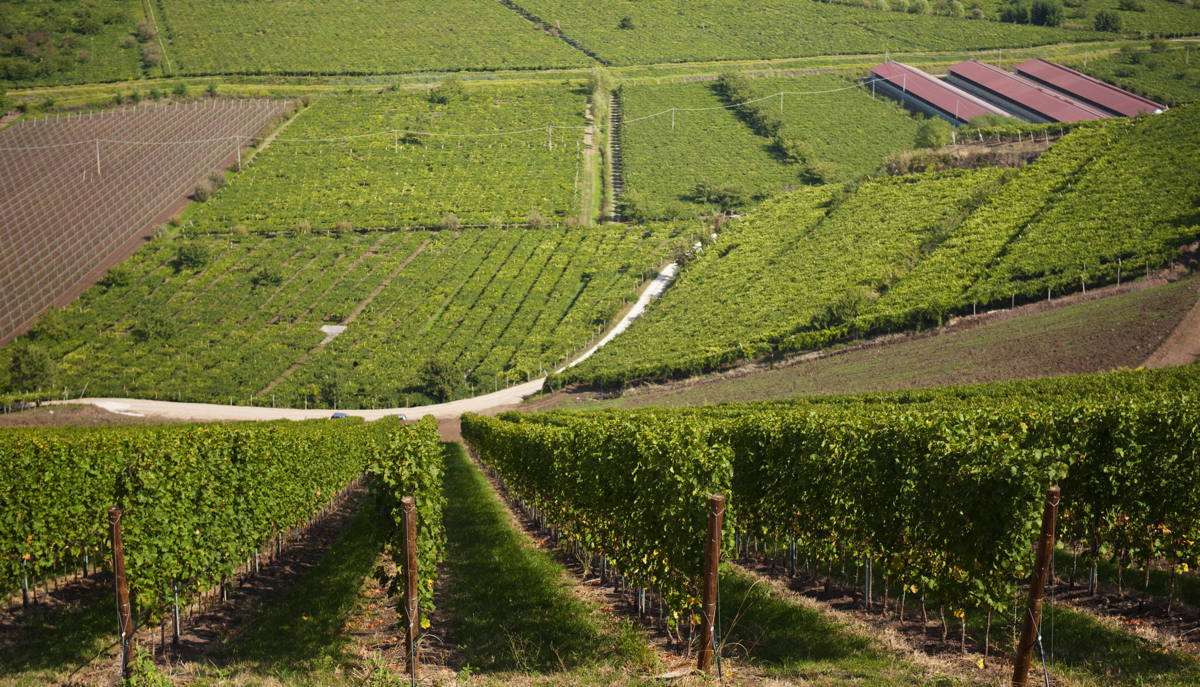
Photo via: https://ilsoave.com/

Photo via: https://ilsoave.com/

The 33 new Crus of Soave are as follows: Castelcerino, Colombara, Froscà, Fittà, Foscarino, Volpare, Tremenalto, Carbonare, Tent, Corte Durlo, Rugate, Croce, Costalunga, Coste, Zoppega, Menini, Monte Grande, Ca ‘del Vento, Castellaro, Pressoni, Broia, Brognoligo, Costalta , Paradiso, Costeggiola, Casarsa, Monte di Colognola, Campagnola, Pigno, Duello, Sengialta, Ponsarà, Roncà–Monte Calvarina.

Of the 33 newly-designated areas, 28 are located within the Classico Zone. Two—resting atop volcanic soils—are located near the commune of ​​Roncà (to the north and east of the Classico Zone), and three are in the limestone hills located in the western portion of the region.

The new designations are approved for use beginning with the wines of the 2019 vintage.

Click here for an interactive map of the 33 crus of Soave, via the website of the Consorzio Soave.

References/for more information:

Post authored by Jane A. Nickles…your blog administrator: jnickles@societyofwineeducators.org
Dispatch from Empordà: Carignan Blanc is Official

Graphic via: https://www.doemporda.cat/

Graphic via: https://www.doemporda.cat/

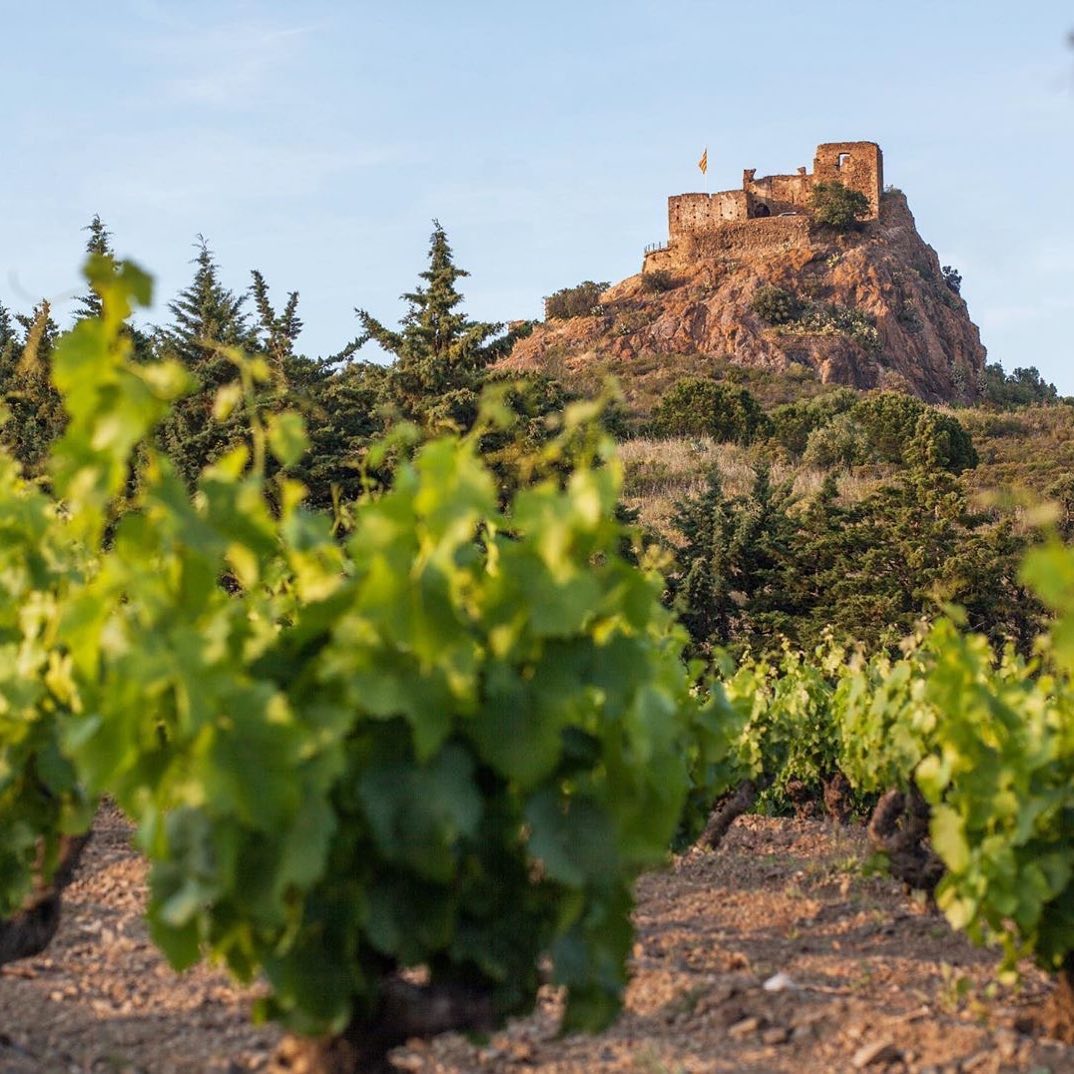
Empordà—a Spanish wine region (denominación de origen/DO)—is located in the northern reaches of Catalonia, just to the south of the Banyuls AOC in France’s Roussillon region. Viticulture and wine production in the area surrounding modern-day Empordà can be traced back to Greek settlements in the area (circa 600 BCE), and is known to have flourished throughout the Middle Ages.

Viticulture and winemaking in the area took quite a blow from phylloxera, in the late 1800s, but by the middle of the 20th century vineyards had been re-planted and wine from Empordà was flowing once again. The area first received DO status in 1975, when it was known as Empordà–Costa Brava, in order to take advantage of the area’s reputation as a beautiful beach-side destination and food-and-wine hotspot. While the area’s reputation remains intact, the name of the wine region was changed to simply Empordà DO in 2006.

The Empordà DO is approved for a long list of grape varieties and an equally impressive list of allowed wine styles. These include still (non-sparkling) wines in red (tinto), white (blanco) and rosé (rosado), as well as sparkling wines (vino espumoso), fizzy/slightly sparkling wines (vino de aguja) and fortified wines (vino de licor). Specialties of the region include Garnatxa del Empordà, a sweet, fortified wine made from sun-dried Garnacha grapes, and Moscatell del Empordà, produced using Moscatel de Alejandría and/or Moscatel de Grano Menudo (Muscat of Alexandria and/or Muscat Blanc à Petits Grains).

Photo via: https://www.doemporda.cat/

Photo via: https://www.doemporda.cat/

The white wines of Empordà are in the news this week. Just yesterday (March 3, 2020) it was announced that an amendment to the region’s pliego de condiciones had been approved and published in the Boletín Oficial del Estado de Espana (Official Bulletin of Spain). This proposal had been in the works for several years; and allows for the use of the Cariñena Blanca (Carignan Blanc) grape variety to be used in the wines of the region. The Empordà DO is the first to allow the use of Cariñena Blanca in its wines.

Cariñena Blanca is a white-skinned mutation of Carignan Noir (also known as Cariñena, Samsó, or Mazuelo). By all accounts, it has been grown and used in the white blends of the region for generations —the region even boasts some 100-year-old Cariñena Blanca vines—despite the fact that it was never entered into the list of official varieties for Spain. This has all changed now, as the official list of recommended grape varieties for the DO now includes Cariñena Blanca, in addition to Garnatxa Blanca (Grenache Blanc), Macabeu (Macabeo/Viura), and Moscatel d’Alexandria. Other authorized white varieties include Chardonnay, Gewürztraminer, Sauvignon Blanc, and Xarel·lo

There are currently about 55 wine-producing estates and just over 1,825 hectares/4,510 acres planted to vine in the Empordà DO.  Perhaps one of the estates will produced a varietal Cariñena Blanca in 2020—it could happen!

References/for more information:

Post authored by Jane A. Nickles…your blog administrator: jnickles@societyofwineeducators.org
Welcome to the World, Vino de Pago El Vicario!

Photo via: https://pagodelvicario.com/

Photo via: https://pagodelvicario.com/

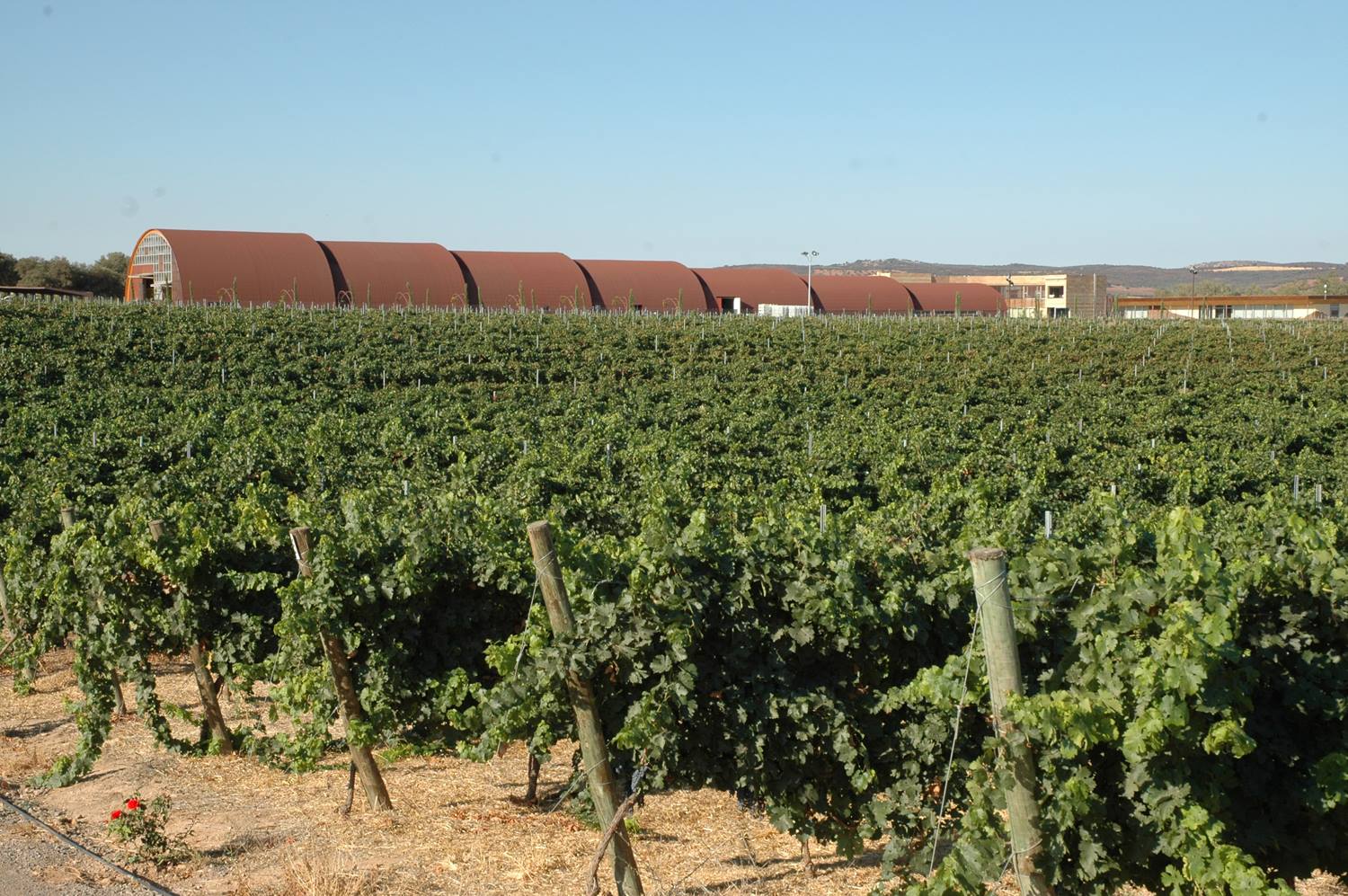
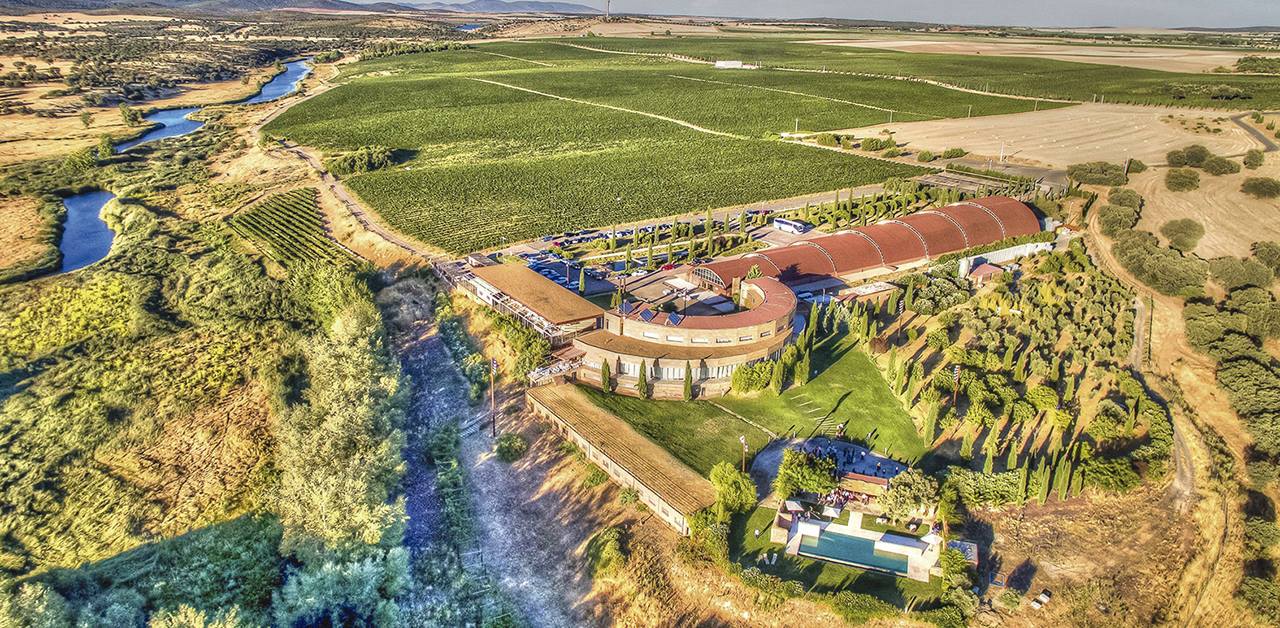
On Tuesday, August 6, 2019 the EU-approved Vino de Pago el Vicario protected designation of origin/PDO wine of Spain came into force.

The newly-registered Pago is located in the comunidad autónoma of Castilla-La Mancha, and is surrounded by the larger La Mancha DO. The registration of the Vino de Pago el Vicario makes a total of 19 Pagos registered in Spain (of which 12 are located in the region of Castilla-La Mancha). According to the fresh-off-the-presses documentation, the details concerning the Vino de Pago el Vicario PDO includes the following:

Location: 86 parcels are approved for use in the wines of the Vino de Pago El Vicario; all of these are located in the municipality of ciudad Real (Castilla–La Mancha, Spain).

Allowed grape varieties: Tempranillo, Syrah, Garnacha Tinta, Cabernet Sauvignon, Graciano, Petit Verdot Merlot, Chardonnay, Sauvignon Blanc

Photo via: https://pagodelvicario.com/

Photo via: https://pagodelvicario.com/

Types/styles of wine:

  • Vino blanco parcialmente fermentado en barrica (partially barrel-fermented white wine)
    • Produced from Chardonnay and/or Sauvignon Blanc, macerated on the grape skins for 12 to 24 hours prior to pressing; small amounts of Tempranillo and/or Garnacha Tinta may be used as well
    • At least 15% of the must is barrel-fermented and allowed to rest on the lees (in the barrels) for 4 to 8 months. Barrels must be European Oak and no older than two years of age. The remainder of the must may be fermented in stainless steel.
  • Vino blanco de uva tinta (white wine from black grapes/blanc de noir)
    • Produced using Tempranillo and/or Garnacha Tinta
    • Fermented in stainless steel
  • Vino rosado (rosé)
    • Produced using Petit Verdot
    • Stainless steel fermentation
  • Vino blanco semidulce (semi-sweet white wine)
    • Produced from Chardonnay and/or Sauvignon Blanc, macerated on the grape skins for 12 to 24 hours prior to pressing
    • Fermented in stainless steel
    • 1.2% to 4.5% residual sugar
  • Vinos tintos elaborados con mezcla de variedades autóctonas y foráneas (blended red wines made with indigenous and international varieties)
    • Produced using Tempranillo, Graciano, Garnacha Tinta, Cabernet Sauvignon, Syrah, Merlot, and/or Petit Verdot
    • Maceration lasts between 5 and 22 days, grapes may be separately or co-fermented, fermentation is followed by barrel aging (no time specified)
  • Vinos tintos elaborados con mezcla de variedades autóctonas foráneas (blended red wines made with indigenous varieties)
    • Produced using Tempranillo, Graciano, and/or Garnacha Tinta
    • Maceration lasts between 5 and 22 days, grapes may be separately or co-fermented, fermentation is followed by barrel aging (no time specified)
  • Vino tinto dulce (sweet red wine)
    • Produced solely using Merlot
    • Maceration lasts between 6 and 15 days, minimum of 4.5% residual sugar

The area is named for the Vicario Dam, located along the River Guadiana. The demarcated area is located about 2 km (1.2 miles) from the river itself and consists of gently rolling hills leading to the banks of the river. The limestone soil is shallow and contains an exceptionally high level of calcium. The proximity to the river (and its temperature-moderating effects) as well as the unique soil of the area help to differentiate the Pago del Vicario PDO from the remainder of the La Mancha DO.

Welcome to the world, Vino de Pago el Vicario!

References/for more information:

Post authored by Jane A. Nickles…your blog administrator: jnickles@societyofwineeducators.org
News from Muscadet Sèvre-et-Maine: Four New Sub-zones Approved

.

.

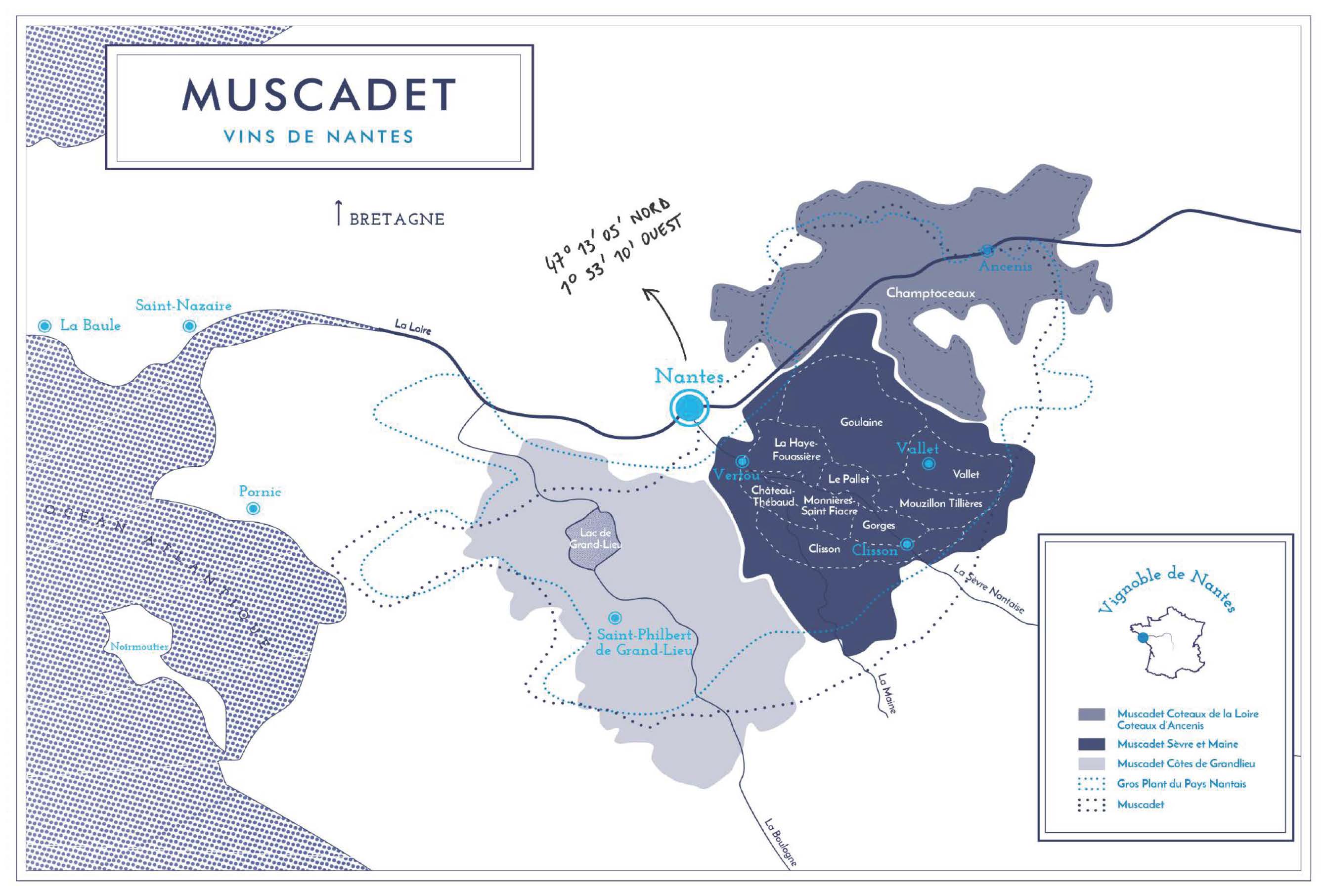
On Wednesday, June 19, 2019 France’s Institut National de l’origine et de la Qualité (INAO) approved a revision of the Cahier des Charges of the Muscadet Sèvre-et-Maine AOC and in doing so, approved four new sub-zones for the appellation. These geographical indications are sometimes referred to as Crus, or Crus Communaux (cru communal zones).

This new announcement means that the appellation now contains seven sub-zones including Clisson, Gorges, and Le Pallet (approved in 2011). These seven sub-zones represent the highest-quality wines (and very limited production) from the large and Muscadet Sèvre-et-Maine appellation.

The Muscadet Sèvre-et-Maine AOC is located in the Pays Nantais area of France’s Loire Valley, and is known for still (non-sparkling) white wines produced using 100% Melon de Bourgogne grapes. Much of the production is produced in the sur lie style, requiring that the wine be aged on the lees (expired yeast cells) until at least March 1 of the year following the harvest. (A sub-zone designation typically requires longer minimum sure lie aging times as well as other specific standards required for qualification.)

Map of Muscadet via: https://www.vinsvaldeloire.fr/en

Map of Muscadet via: https://www.vinsvaldeloire.fr/en

The new sub-zones are as follows:

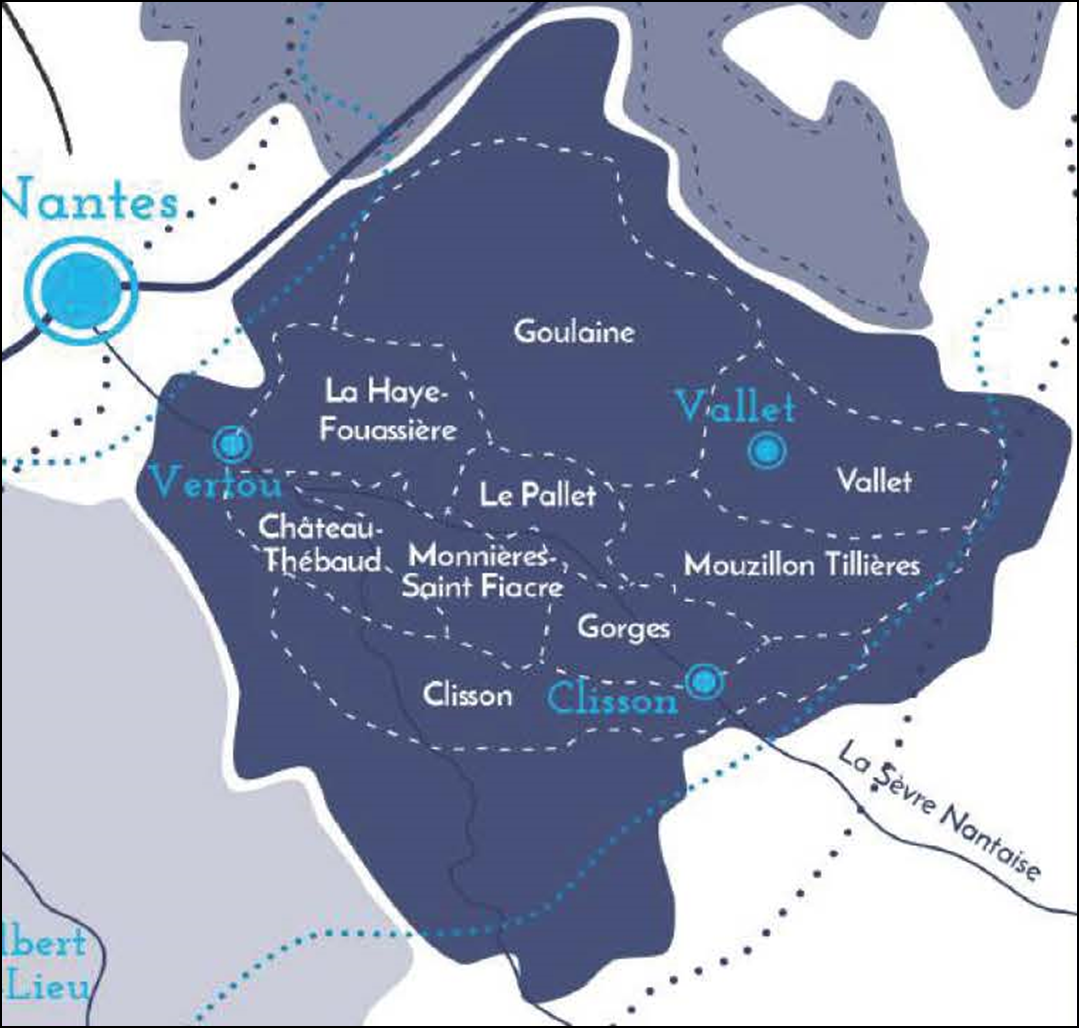
Goulaine: Goulaine is the northernmost as well as the largest of the seven crus of Muscadet Sèvre-et-Maine AOC. This area is dominated by a series of small hills overlooking the Marais de Goulaine (a swampy area known as the Marsh of Goulaine). Top soils are coarse and sandy; subsoils are mainly metamorphic (gneiss and schist). Vines in the Goulaine sub-zone tend to have early bud break and are often the first vines in the area to be ready for harvest.

Château-Thébaud: The Château-Thébaud sub-zone is located in the southwest portion of the Muscadet Sèvre-et-Maine AOC, just to the north of Clisson. The area consists mainly of hills and hillsides, some of them steep and wooded. Many of the finest vineyard sites are located near the Maine River as it flows through this area in a north/northwest direction. Soils are mainly sandy/stony atop granite and gneiss.

Detail of the map of Muscadet via: https://www.vinsvaldeloire.fr/en

Detail of the map of Muscadet via: https://www.vinsvaldeloire.fr/en

Monnières-Saint-Fiacre: The Monnières-Saint-Fiacre cru—also located just to the north of the Clisson subzone—lies just to the east of Château-Thébaud. The vineyards are planted on a succession of hillsides spread over eastern bank of the River Sèvre, extending into the surrounding valleys and woods. The soils consist primarily of sandy loam over a subsoil of gneiss and some clay.

Mouzillon-Tillières: Mouzillon-Tillières is located to the north of the River Sèvre, to the north/northeast of the Gorges sub-zone. It is centered around the Sanguèze River (a 44km-/27 mile-long tributary of the Loire).  The vines are planted on a series of small hillsides and outcrops along both the sides of the river. The soils are mainly composed of sand and clay over gabbro bedrock (gabbro is an igneous rock created by the slow, underground cooling of magma).

Keep those flashcards handy: According to the website of Loire Valley Wines (Vins de Val de Loire), three more areas— La Haye-Fouassière and Vallet (in Muscadet Sèvre-et-Maine), as well as Champtoceaux (located within the Muscadet Coteaux de la Loire AOC)—are being considered for sub-zone status.

Please note that while you will be able to see these subzones on wine labels beginning with the 2018 harvest, the new-and-improved Cahier des Charges for the Muscadet Sèvre-et-Maine AOC (as linked below) will still need to wind its way through the EU registration process.

Click here for more information on Muscadet (note the details on the Clisson, Gorges, and Le Pallet sub-zones near the bottom of the page).

Post authored by Jane A. Nickles…your blog administrator: jnickles@societyofwineeducators.org
References/for more information: